Financing industrial outdoor storage (IOS) is both easier and harder than financing buildings. Easier, because the assets are simple, durable, and land-anchored; harder, because some lenders are unfamiliar with low-coverage yards and underwrite them cautiously, and because environmental and entitlement issues can complicate loans. Understanding the capital options helps owners structure deals and improve returns.
Will Banks and Credit Unions Finance IOS?
Yes. Bank and credit-union loans are the backbone of IOS financing, especially for smaller deals and local sponsors. They lend against land value, in-place income and borrower strength at conservative loan-to-value ratios, and scrutinize environmental reports, zoning, surface condition and leases. Banks unfamiliar with IOS may misprice it as raw land or avoid it.
Conventional bank and credit-union loans are the backbone of IOS financing, especially for smaller and mid-sized deals and local sponsors. Banks lend against the land value, the in-place income, and the borrower's strength, typically at conservative loan-to-value ratios given the land-heavy collateral. They scrutinize environmental condition (a Phase I is standard, Phase II if flagged), zoning and legal use, surface condition, and lease quality — the same items covered in IOS Due Diligence. Relationship banks that understand IOS can be flexible; those that do not may misprice the asset as raw land or avoid outdoor storage entirely.
Can an Owner-User Buy an IOS Yard With an SBA Loan?
Yes. A contractor, trucking company or equipment firm buying a yard to operate from can use SBA 504 or 7(a) loans, which offer high leverage and long terms with relatively little equity. The 504 program is designed for owner-occupied real estate, so it suits operating companies rather than passive investors and can give owner-users a bidding edge.
For owner-users — a contractor, trucking company, or equipment firm buying a yard to operate from — SBA 504 and 7(a) loans can be powerful, offering high leverage and long terms with relatively low equity. The 504 program in particular is designed for owner-occupied real estate. SBA financing requires genuine owner-occupancy, which makes it a tool for operating companies rather than passive investors, and it can be a real competitive advantage for owner-users bidding against investors for the same yard.
When Do Life Companies, CMBS or Private Credit Make Sense for IOS?
Larger, stabilized, leased IOS assets can access life-company and CMBS debt with scale and long terms. Private credit and bridge lenders fill the gaps banks leave: value-add and lease-up plans, entitlement plays, quick closings and deals with environmental or zoning complications. It costs more but is faster, and owners often refinance into cheaper permanent debt later.
Larger, stabilized IOS assets can access life-company and CMBS debt, which offer scale and long terms for institutional-quality, leased product. At the other end of the business-plan spectrum, private credit and bridge lenders fill the gaps banks leave — transitional assets, value-add and lease-up plans, entitlement plays, quick closings, and deals where environmental or zoning hair scares off conventional lenders. Private credit is more expensive than bank debt but faster and more flexible, and it is often the right tool to acquire and stabilize a yard before refinancing into cheaper permanent debt.
How Does an IOS Sale-Leaseback Work?
A company that owns and operates from a yard sells the real estate to an investor and signs a long-term lease to keep using it. The operator unlocks capital to reinvest in its business, and the investor gets a stabilized, often net-leased asset with a tenant who has every incentive to stay. Sale-leasebacks drive many institutional IOS acquisitions.
Sale-leasebacks are a defining transaction in IOS. A company that owns and operates from a yard sells the real estate to an investor and signs a long-term lease to keep using it. The operator unlocks capital trapped in real estate to reinvest in its business, while the investor acquires a stabilized, often net-leased asset with an in-place tenant who has every incentive to stay. Sale-leasebacks have been a major source of institutional IOS acquisitions, converting operator-owned yards into investment product — a dynamic that connects directly to IOS Valuation.
What Role Does Preferred Equity Play in IOS Deals?
For larger and development-stage deals, preferred equity sits between senior debt and common equity, providing capital at a fixed return with priority over common equity but subordinate to the loan. It helps sponsors fill the capital stack, reduce common-equity needs, and finance value-add or development — see IOS Development — without taking on more senior leverage than a lender allows.
Worked example: sizing a loan on a leased yard
Illustrative — Hypothetical round numbers chosen to show the math — not market pricing or a quote. Verify rents, costs and cap rates against current local comparables.
| Net operating income | $120,000 |
| Value at a 7% cap rate | ≈ $1,714,000 |
| Loan at 65% loan-to-value | ≈ $1,111,500 |
| Annual debt service at 7.0%, 25-year amortization | ≈ $94,300 |
| Debt service coverage (NOI ÷ debt service) | ≈ 1.27x |
| Largest loan that still meets a 1.25x minimum | ≈ $1,132,000 |
Here the 65% loan-to-value limit, not coverage, sets the loan size. If the rate rose or NOI fell, the coverage test would take over and shrink the loan. Size the deal on whichever test binds first, and keep reserves for a vacancy.
Frequently Asked Questions about IOS Financing
How is IOS financed?
Can you use an SBA loan to buy IOS?
What is a sale-leaseback in IOS?
Why is IOS sometimes hard to finance?
What is preferred equity in an IOS deal?
Financing or recapitalizing an IOS deal?
Carson Jones is a licensed commercial real estate advisor and business broker with eXp Commercial. For acquisitions, dispositions, sale-leasebacks, and connecting to the right capital for IOS, get an experienced read on structure and value.
Related IOS guides
- The Complete Industrial Outdoor Storage (IOS) Owner's Guide
- IOS Valuation
- IOS Tax Strategies
- IOS Development
Educational only — not legal, tax, or investment advice. Loan programs, rates, and terms vary by lender and change over time; verify current terms and engage qualified professionals. Carson Jones is a licensed commercial real estate advisor with eXp Commercial. Last updated June 19, 2026.
IOS Financing Questions Investors Ask
Industrial outdoor storage is land-heavy, which changes how lenders size, structure, and secure loans. These are the financing questions buyers, developers, and owner-users ask most, answered for IOS yards and the raw land behind them.
Financing land and raw yards
How do investors finance vacant land for an IOS yard?
Most use a local bank or credit-union land loan, seller financing, or cash, sometimes supplemented by a HELOC or a loan against other property. Raw land loans usually require 35% to 50% down, shorter terms, and full recourse because the land produces no income. Larger purchases are often split: buy with cash or seller financing, then refinance once the yard is improved and leased. Using a HELOC puts your home at risk, so size it conservatively.
Do lenders lend on raw land at all?
Yes, but conservatively. Federal bank regulators' supervisory guidelines set a 65% loan-to-value ceiling for raw land, 75% for land development, and 80% for commercial construction, and many banks lend below those limits. Expect a shorter term, a higher rate, full recourse, and a requirement that you show how you will service the debt without income from the land. Land with zoning, utilities, and a clear IOS plan finances more easily than speculative acreage.
What types of lenders are most likely to finance vacant land for an IOS project?
Community banks and credit unions that know the local market are usually the best fit, along with private lenders and sellers willing to carry a note. National banks, life companies, and CMBS lenders rarely touch unimproved land. A relationship lender that already holds your deposits or other loans is often the most flexible. Bring a clear plan for zoning, improvements, and leasing to any lender you approach.
How do you acquire land for an IOS project if lenders won't finance it?
Use structures that reduce the cash you need up front. Common options are seller financing, a purchase option or long due-diligence period while you secure zoning, a ground lease with a purchase right, or a joint venture where the landowner contributes the land as equity. Some buyers close with cash and refinance once the yard is improved and leased. Each structure shifts risk and return, so price it accordingly.
SBA loans for owner-users
Why would an owner-user choose a conventional commercial loan over an SBA 504 loan?
Speed, simplicity, and flexibility. A 504 loan offers long fixed-rate financing with as little as 10% down, but it involves a bank and a Certified Development Company, more paperwork, and owner-occupancy requirements. A conventional loan can close faster, has fewer fees, and may suit a buyer who can put 20% to 30% down or who plans to lease part of the yard to outside tenants. For small or short-hold purchases, the 504's advantages may not outweigh the extra process.
Is an SBA 504 loan slower or harder to get than a conventional commercial loan?
It is usually slower, but not necessarily harder. A 504 loan requires approvals from both a bank and a Certified Development Company, so closing often takes longer than a conventional loan. Approval can actually be easier for qualifying owner-users because the lower down payment and the CDC's second position reduce the bank's risk. Plan extra time for SBA eligibility review, appraisal, and environmental requirements.
What do lenders look at when underwriting an SBA 504 loan?
Mainly the operating business's cash flow, the owners' credit and experience, and occupancy of the property. The business must meet SBA size standards and generally occupy at least 51% of an existing property or 60% of a new building. Lenders want historical cash flow that covers the debt, personal guarantees from 20%-plus owners, and an equity injection of 10%, or more for startups and special-purpose properties. Environmental review is required, which matters for many industrial yards.
Can new construction costs be rolled into an SBA 504 loan?
Yes. SBA 504 loans can finance land acquisition, site work, and new construction, along with eligible soft costs, as part of one project. The bank typically provides an interim construction loan, and the CDC portion funds after the project is complete. For a new building or newly built project, the business generally must occupy at least 60% at the start, and the required down payment may be higher for a new business or a special-purpose property.
Is buying an IOS yard for your own business a good use of capital?
It can be, if the yard is central to operations and you expect to stay long term. Owning locks in occupancy costs, builds equity, and can be financed with as little as 10% down through SBA 504. The tradeoff is that capital tied up in real estate isn't available to grow the business, and selling later takes time. Compare total ownership cost with market rent and with the return you would earn reinvesting that capital in the business.
Can a company's net income debt-service the entire mortgage on an owner-occupied commercial property?
Yes. For owner-occupied loans, lenders underwrite the operating company's cash flow, not market rent, and typically want coverage of about 1.25x after the owners' compensation. Any rent from outside tenants is added on top. If the business can't cover the full payment, lenders may ask for a larger down payment, a guarantor, or a smaller purchase.
How lenders underwrite IOS
What makes an IOS or commercial property financeable?
Reliable income, a clear legal use, and a borrower who can carry the loan through problems. Lenders want a lease or operating history that covers the debt, zoning that clearly allows the use, a clean environmental report, and a sponsor with liquidity and relevant experience. For IOS, they also look at tenant credit, lease term, and the land value behind the loan, since that is the fallback if the tenant leaves.
How do lenders calculate DSCR at a proposed loan amount?
They divide the property's net operating income by the annual principal and interest payment at the proposed loan amount. For example, $150,000 of NOI against $120,000 of annual debt service is a 1.25x DSCR. Lenders use their own underwritten NOI, often with a vacancy factor and reserves, so their number is usually lower than the seller's. If DSCR falls short, the loan amount is reduced until it meets the minimum.
How much does DSCR change commercial refinance terms in the current rate environment?
A lot. Most bank and agency lenders require a minimum of about 1.20x to 1.35x, so a deal at 1.0x usually can't refinance at the same loan amount and must pay down debt, bring in new equity, or use a bridge or private lender at a higher rate. Deals at 1.25x or higher get the widest choice of lenders and the best pricing. With rates well above where many loans were originated, DSCR is often the limiting factor on refinance proceeds.
How do lenders view tenant concentration, and what happens if the largest IOS tenant leaves?
As a major risk. A single-tenant yard depends on one lease, so lenders look at the tenant's credit, remaining term, and how long it would take to re-lease the site. If the tenant leaves, the loan can go into default unless the borrower can cover payments. Lenders offset this with lower leverage, cash reserves, a cash sweep near lease expiration, or guarantees. The land value and the depth of local demand for yards are your backstop.
How much liquidity should a borrower have if the business plan takes longer than expected?
Enough to cover debt service, taxes, insurance, and carrying costs for the full delay you could realistically face, often 6 to 12 months or longer for entitlement or lease-up deals. Lenders often require post-closing liquidity equal to a set percentage of the loan or several months of payments. Running out of cash before the yard is leased is a common way IOS deals fail.
When would a lender enforce a personal guarantee on a commercial loan, and how does it work with multiple partners?
After a default when selling the property won't repay the loan, or when a guarantor triggers a recourse carve-out such as fraud or an unauthorized transfer. Many guarantees are joint and several, meaning the lender can pursue any one partner for the full amount, leaving partners to sort out contribution among themselves. Have an attorney review the guarantee and put contribution terms in your operating agreement.
When bank math doesn't pencil
How do you finance an IOS deal when bank DSCR requirements aren't met?
Increase equity or use other capital. Options include a larger down payment, seller financing in second position, preferred equity, a bridge loan until rents increase, or a lender that sizes the loan on land value rather than income. You can also renegotiate the price. If the deal works only with expensive debt, test whether the returns still justify the risk.
Are investors using seller financing, shifting asset classes, or waiting for cap rates to adjust?
All three. Seller financing works best with owners who have little or no debt and want installment-sale treatment. Some investors have moved toward land-heavy assets like IOS, where lower capital costs and limited new supply support rent. Others hold cash until prices reset. The right choice depends on your cost of capital and the opportunity in front of you.
When does bridge financing make sense for an IOS deal?
When the property can't qualify for permanent debt today but will after a defined plan, such as paving and fencing a yard, re-leasing it, or finishing entitlements. Bridge loans close quickly and fund improvements, but they cost more and have short terms, often one to three years. Use one only when you have a clear, realistic path to a refinance or sale before maturity.
How is a creatively financed commercial deal typically structured?
Usually by layering several sources. A common example is a senior bank loan, seller financing for part of the equity gap, and investor equity or preferred equity for the rest. Other structures include a master lease with an option to buy, assuming the seller's existing loan, or a sale-leaseback. The lender's consent is required for any subordinate debt, so confirm the senior loan allows it.
Financing entitlements and development
How do you finance the entitlement phase of an IOS land deal?
Mostly with equity. Banks rarely fund rezoning, engineering, and permitting because there is no collateral value until approvals are in hand. Developers use their own capital, investor equity, or seller financing, and often negotiate a long closing or an option period so entitlement costs are spent before they own the land. Once entitled, the land can support acquisition and development financing.
Should you talk to a lender before putting IOS land under contract?
Yes, at least informally. A short conversation tells you the likely down payment, rate, and conditions, so you can write a contract with the right financing and due diligence periods. You don't need a formal commitment first. Getting the land under contract with appropriate contingencies, then working on the full loan application, is the normal sequence.
How much sponsor equity do land development lenders expect?
Usually 25% to 50% of total cost for land and entitlement deals, and somewhat less for construction once a project is fully entitled and leased or pre-leased. Lenders also want to see equity spent before their loan funds. Regulatory loan-to-value limits for raw land and development land are a ceiling, and many banks lend below them.
Will lenders fund acquisition and entitlement costs, or only reimburse soft costs later?
Most banks fund acquisition at a lower loan-to-value and leave entitlement costs to equity. Some will reimburse soft costs at the construction loan closing if those costs added value and are documented. Private and bridge lenders are more likely to fund both, at higher rates. Agree on how soft costs will be treated before you start spending.
What loan-to-cost and loan-to-value do lenders allow on land deals, and do they require full recourse?
Typically 50% to 65% loan-to-value on raw land and up to about 75% on development land, with full recourse in most cases. Federal bank supervisory guidelines cap raw land at 65% and land development at 75%, and lenders often stay below those limits. Non-recourse land loans are rare and usually require low leverage or a strong sponsor.
Can land you already own cover the down payment on a construction loan?
Usually yes. Lenders typically credit land equity toward the required equity contribution, valued at appraised value or cost, often whichever is lower if you bought it recently. If the land's equity meets the requirement, you may not need to add 10% to 20% in cash, although lenders still want liquidity for overruns. The land must be pledged as collateral for the construction loan.
Track record and private capital
Why would a lender refuse to count your experience on a ground-up project?
Because experience with existing properties doesn't prove you can manage construction. Lenders want evidence you have delivered similar projects on time and on budget. If you lack that, they may require a partner or general contractor with a strong track record, a completion guarantee, or more equity.
How should you document your track record for ground-up construction lenders?
Prepare a schedule of completed projects showing type, size, total cost, budget versus actual, timeline, financing, and outcome (sale price or stabilized value). Include your team's resumes, references from lenders, and contractor credentials. For a first IOS development, show related experience, such as site work or industrial leasing, and name the experienced partners on the project.
What is the biggest hurdle in securing private capital for a new IOS development?
Trust in the sponsor's ability to execute. Investors want proof that entitlement, construction, and leasing risks are understood and priced, and that the sponsor has meaningful money in the deal. A clear budget, conservative timeline, realistic rent assumptions, and a downside plan matter more than a high projected return.
Equity structures and leverage
How are operators structuring short-term equity for raw land plays?
With preferred returns and profit splits, straight equity splits, or debt-equity hybrids. A common structure gives investors a preferred return, then a split of profits above it, with the sponsor earning a promote. Hybrids like participating notes give investors a fixed return plus a share of upside. The structure should match the risk: speculative entitlement plays usually need more upside for investors.
How are IOS and land developers streamlining their equity raises?
By building repeatable programs instead of raising capital deal by deal. Common approaches are standardized offering documents, a programmatic partner or discretionary fund, and an investor list built before the next deal. Raising capital from investors is generally a securities offering, so work with securities counsel on the exemption you rely on.
Should you use debt or buy an IOS property all cash?
It depends on your cost of capital and your tolerance for risk. Moderate leverage raises returns when the cap rate exceeds the loan cost, while all-cash ownership gives safety and flexibility through a vacancy. Because IOS is land-heavy and often has single tenants, many investors use lower leverage than on other industrial assets. You can buy with cash and place debt later once the yard is leased.
Acreage, site work and the lender's exit test
Do lenders underwrite an IOS yard on gross or usable acres?
Usable acres. The appraisal values the income the leasable, drivable area produces, cross-checked against price and rent per usable acre. Land lost to setbacks, detention, easements or floodplain adds little to loan value. A survey that clearly separates usable from gross acreage helps the appraisal and avoids surprises at loan sizing. See IOS site selection.
Will lenders finance grading, surfacing and stormwater work on an IOS yard?
Usually yes, as part of a construction or site-development loan once the site is entitled. Funds are released in draws against a budget backed by contractor bids. Owner-users can use SBA 504 financing, which covers construction and land improvements. Lenders want the stormwater design approved and permits in hand before funding site work, because unapproved drainage is a common cause of delays and overruns.
How does a lender judge the exit or refinance on an IOS loan?
Lenders ask whether the loan can be repaid at maturity. They test whether the yard's income would support a refinance at higher rates, whether a major lease expires before the loan does, and what the land is worth if the tenant leaves. Expect reserves or a cash sweep ahead of a large lease expiration. Bridge lenders want a clear path to permanent debt or a sale.
Sources
Have a commercial deal that needs an equity partner?
Send the details — property, location, capital stack and timeline — and Carson will review it. Brokerage and equity participation for commercial real estate owners, investors, and family offices through the eXp Commercial platform.
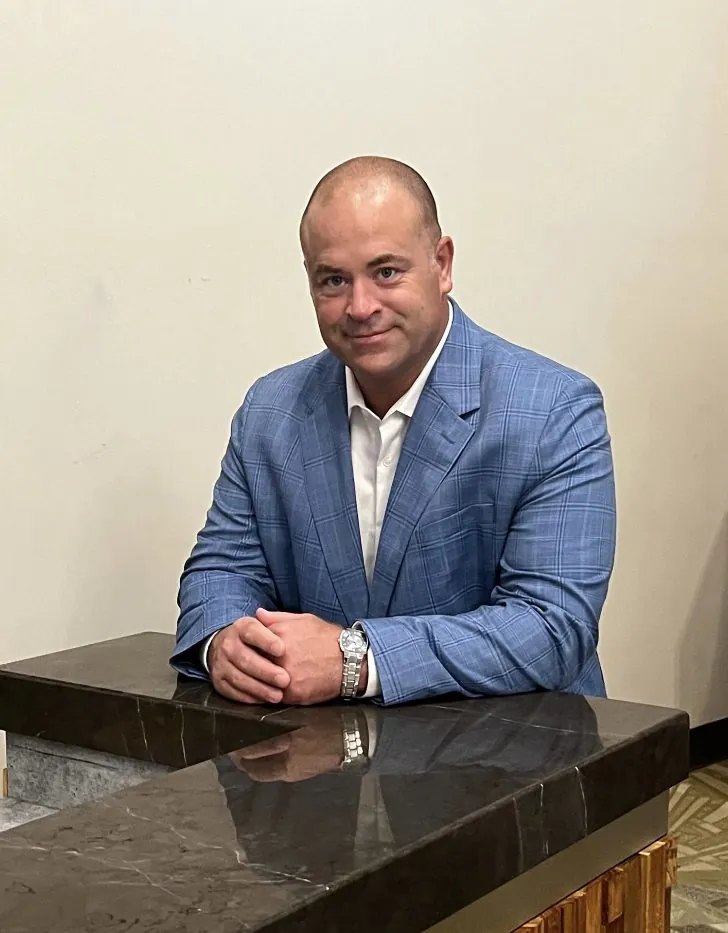
Carson Jones
Carson Jones is the host of Carson's Corner: Commercial Real Estate, author of The Red Flag Playbook, a licensed commercial real estate advisor and business broker, and the founder of Passive Investments. With 18 years of experience as an entrepreneur and 12 years specializing in passive investing, Carson works with high-net-worth individuals, family offices, business owners, and sophisticated investors as a broker and principal.
Carson holds a BBA in Finance from Baylor University and his Tennessee commercial real estate license (#382989). He actively pursues acquisition and equity opportunities across the United States and abroad through a worldwide network of qualified buyers, family offices, institutional investors, and top-tier developers.