TL;DR — THE PLAYBOOK IN SEVEN MOVES
- Plan the workout before you need one — denial burns leverage.
- Protect your cash. It is the only currency lenders actually respect.
- Re-underwrite your own asset like you are buying it today.
- Bring the lender a story their credit committee can defend.
- Relationships open the door. Economics walk through it.
- Choose your workout path — modification, DPO, note sale, hand-back — with math, not emotion.
- Release the personal guarantee whenever the structure allows.
About this playbook
The era of "extend and pretend" is winding down. Borrowers holding distressed multifamily and office loans are walking into workout conversations with lenders for the first time in their careers — and the next move often defines the next decade of their portfolio.
This page is a reference playbook for entrepreneurs, investors, and operators in commercial real estate who want to protect their equity, their guarantees, and their reputations when the market turns against them. It covers how lenders and special servicers actually behave, what they grant relief on, and how a prepared borrower negotiates from strength even when the asset is under water.
Key concepts at a glance
Pre-default positioning
Treat a potential workout as mission-critical and assemble your team before the first missed payment.
Re-underwriting the asset
Model your property like a brand-new buyer at today's rents, expenses, and debt cost.
Cash as leverage
The dollars you keep are the dollars that buy you relief. Do not burn them before the table.
Credible alternatives
Lenders grant relief to the borrower who offers a better path than foreclosure — not the loudest one.
Special servicing
Authority lives at the special servicer. Getting there has costs, timing, and real strategic trade-offs.
Modification vs. DPO
Modifications preserve the loan with new terms. Discounted payoffs reset basis with fresh capital.
Frequently asked questions
What is "extend and pretend," and why is that era ending?
"Extend and pretend" is the practice of lenders granting short maturity extensions or forbearance on troubled loans rather than forcing a restructure or recognizing a loss, hoping market conditions improve. That cycle is ending because rates have stayed elevated, occupancy and rent assumptions on many multifamily and office assets have not recovered, and special servicers, banks, CMBS trusts, and debt funds are being pressured by investors, auditors, and regulators to acknowledge real valuations. Borrowers who assumed a refinance or sale would bail them out are now facing real conversations with lenders — and whoever shows up best prepared gets the best outcome.
When a commercial loan starts going sideways, what's the first move a borrower should make?
Plan early and treat the potential workout as mission-critical. Long before a maturity date or a covenant trigger, stress test your debt service, re-forecast NOI under current market rents and expenses, and model what happens at refinance with today's debt costs. Quietly assemble a workout team — counsel, a restructuring advisor, a credible valuation — before you call the lender. Denial fueled by "we'll refinance or sell by then" is the single most common way borrowers lose leverage.
What is the biggest mistake borrowers make with their cash before a workout?
Burning it into the property. Borrowers often use their own liquidity to patch debt service, fund TIs, or cover operating shortfalls right up until they walk into the lender's office empty-handed. That destroys leverage. Cash in your hand is one of the few things a lender actually cares about — it is what funds a discounted payoff, a pay-down in a modification, or the reserves your servicer needs to get credit committee approval. Spend your last dollar before the negotiation and you have nothing to trade.
How should a borrower "re-underwrite" their own asset before approaching the lender?
Look at your property the way a brand-new buyer would on day one. Build a clean proforma at market rents, realistic vacancy, current operating expenses, actual insurance and tax renewals, and today's debt cost. Determine the as-is value, the stabilized value with a credible business plan, and the capital required to get there. That exercise tells you what the asset is truly worth, what debt it can actually support, and what kind of relief you need from the lender. Without it, your conversation is emotional rather than financial — and emotion loses to spreadsheets in a workout.
What do lenders actually want in a distressed CRE negotiation?
Certainty, speed, and a story their credit committee or bondholders can defend. Most lenders are not looking to own your building. They want a clear path that minimizes their loss relative to the alternatives — foreclosure, receivership, protracted litigation. A borrower who arrives with a realistic business plan, current financials, a fresh valuation, fresh capital at the ready, and a professional team makes the lender's internal job easier. That is what earns relief.
Why don't lenders want the keys to the building?
Taking back an asset triggers legal cost, receivership cost, operating cost, a mark-to-market loss, and months or years of carry. Foreclosure is almost always the worst financial outcome for a lender, even in a stressed market. The threat of a deed-in-lieu is not leverage — the credible alternative of a better-executed workout with a capable sponsor is. That is why showing the lender you are the best operator available for the asset matters more than posturing.
Do relationships with lenders actually move the needle in distressed debt negotiations?
Relationships buy you a return phone call and a seat at the table. They do not override a credit memo, a pooling and servicing agreement, or a special servicer's fiduciary duty to the trust. What moves a lender to grant real relief is economic logic — a credible business plan, credible capital, and credible alternatives. Relationship capital opens the door; analysis and leverage are what walk through it.
What's the difference between talking to the master servicer and requesting transfer to special servicing?
The master servicer handles performing CMBS loans and has almost no authority to modify loan terms. Real workout decisions happen at the special servicer. Transferring to special servicing gives you someone with authority to negotiate — but it also triggers special servicing fees (which the borrower ultimately pays), signals distress, and can accelerate remedies. Some borrowers with an obvious maturity default request transfer early to start the clock; others hold off until the last possible moment. That decision should be made with advisors, not improvised.
Should a CMBS borrower hire a workout advisor?
Generally yes. CMBS workouts are opaque, procedural, and played by participants who do this full-time while most borrowers do it once. A restructuring advisor who lives in this world helps craft the business plan, the valuation narrative, the proposal package, and the negotiation sequence. Lenders and special servicers also take a proposal more seriously when it is vetted by a recognized workout team — it signals the borrower is organized, realistic, and unlikely to waste the servicer's time.
What are the early warning signs that a business plan has shifted from a real plan to "hope"?
You are missing underwriting targets on rents, leasing velocity, or stabilization timelines quarter after quarter, and the recovery is always "next year." You are funding debt service out of reserves, capital calls, or personal liquidity instead of operations. You cannot refinance today without recourse or a meaningful equity check, and the exit depends on a cap rate that does not exist in the current market. When every model requires a market that has not shown up, the plan has become hope.
What negotiation tactics work in high-stakes CRE restructures, and which ones blow deals up?
What works: a long-game posture, professionalism even when it gets contentious, firm but cordial communication, a clean data room, and alternative paths presented side-by-side so the lender can pick the one that makes their committee comfortable.
What blows deals up: ultimatums, hostile letters, threats of bankruptcy used as a bluff, disappearing from communication, unrealistic DPO numbers without support, or letting emotions drive the conversation. Servicers have long memories and share information across portfolios.
When should a borrower fix problems at the property level vs. bring the lender to the table?
If the gap is operational — leasing, expense control, a bad property manager, a temporary capex need — fix it at the property level first. If the gap is structural — the debt cannot be serviced at any realistic rent level, or the refinance math is broken at any reasonable cap rate — no amount of property-level effort solves it, and you need the lender at the table. Running hard at an operational fix that cannot close the real gap only burns the cash you need for the workout.
What is the difference between a loan modification and a discounted payoff (DPO)?
A loan modification keeps the loan in place with new terms — extended maturity, adjusted rate, reset amortization, new reserves, sometimes a pay-down. A discounted payoff retires the loan at less than par in exchange for fresh capital, usually from the existing sponsor, a new equity partner, or a third-party note buyer. Modifications preserve continuity and relationships; DPOs create a clean reset and are often the cleanest way to reset basis on an overleveraged asset. Which path fits depends on the capital structure, the lender's accounting, and the asset's forward outlook.
How does a personal guarantee or recourse exposure change workout strategy?
It changes everything. With recourse or bad-boy carve-outs in play, the borrower is not just protecting the asset — they are protecting personal balance sheets. That raises the cost of a deed-in-lieu, a strategic default, or a contested foreclosure, and it usually pushes borrowers toward a negotiated modification or DPO that expressly releases the guarantee. A workout advisor's job here is to quantify the recourse exposure, model the worst-case personal outcome, and use that in the negotiation in a sophisticated way rather than as a panic lever.
Is distressed office debt different from distressed multifamily debt?
Multifamily distress is usually a rate and underwriting story — floating-rate bridge debt, aggressive rent growth assumptions, missed caps, and capex not getting to targeted rents. The asset itself typically still has demand, so the fix is usually capital, time, and a rewritten basis.
Office distress is often a demand-and-use story — structural vacancy, changed tenant behavior, obsolescence, and in many cases a building that will not re-stabilize at any rational rent. That means office workouts more frequently require note sales, significant principal write-downs, change of use, or strategic hand-backs, where multifamily workouts more often end in modifications and DPOs.
What is a pre-negotiation agreement and why is it important?
A pre-negotiation agreement (PNA) is a threshold document lenders typically require before any real workout discussion. It confirms that discussions are non-binding, preserves the lender's rights under the loan documents, and usually contains acknowledgments of default and waivers that favor the lender. It is not optional — no serious workout talk happens without one — but the specific terms matter and should be reviewed by counsel before signing. A sloppy PNA can quietly waive leverage before the real negotiation has even started.
How do you negotiate from a position of strength when the asset is clearly under water?
Leverage in a workout is not the same thing as equity value. It comes from being the most credible operator available for the asset, having a realistic plan the lender can defend internally, having capital ready to deploy into the right structure, understanding the lender's true alternatives and their cost, and being willing to walk away from a bad deal — not as a bluff, but because the personal and financial math genuinely supports it. Borrowers who assemble those ingredients negotiate on even footing even when the asset itself is deeply impaired.
Staring at a distressed loan?
If you're an entrepreneur, investor, or operator in commercial real estate and you're facing a tough deal, reach out before you make your next call to your lender.
More from Carson's Corner
Carson's Corner on Buzzsprout · full episode archive.
.
Carson's Corner on Passive Investments.
Selling, buying, or raising capital? Let's talk.
Brokerage, equity participation, and capital partnerships for commercial real estate owners, investors, and family offices — nationwide, through the eXp Commercial platform.
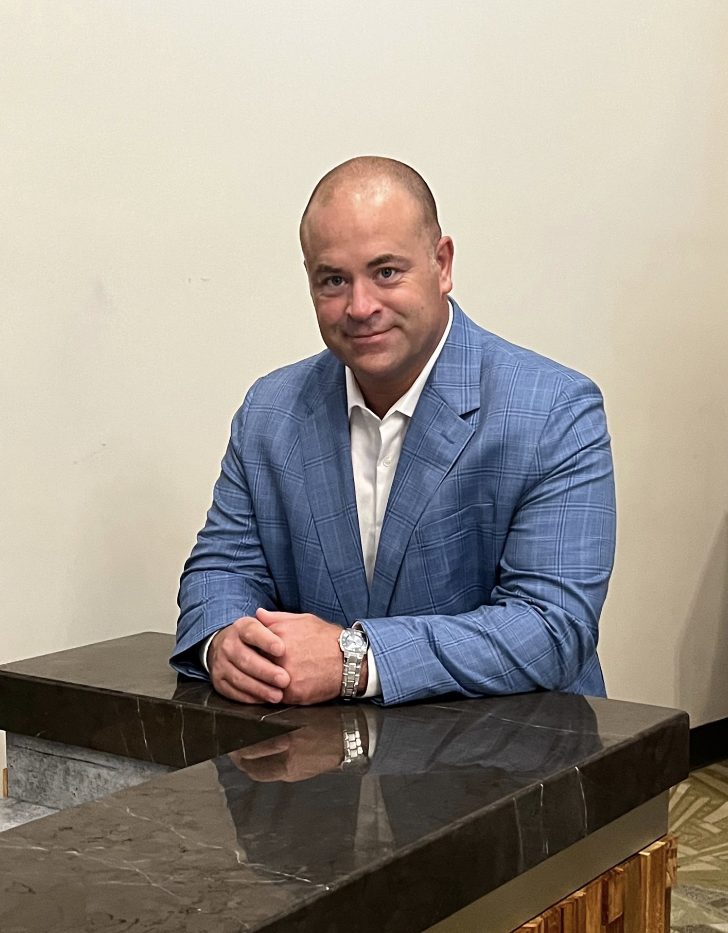
Carson Jones
Carson Jones is the host of Carson's Corner: Commercial Real Estate, author of The Red Flag Playbook, a licensed commercial real estate advisor and business broker, and the founder of Passive Investments. With 18 years of experience as an entrepreneur and 12 years specializing in passive investing, Carson works with high-net-worth individuals, family offices, business owners, and sophisticated investors as a broker, principal, and capital partner.
Carson holds a BBA in Finance from Baylor University and his Tennessee commercial real estate license (#382989). He actively pursues acquisition and equity opportunities across the United States through a nationwide network of qualified buyers, family offices, institutional investors, and top-tier developers.