What options does a lender have to resolve a troubled commercial loan?
A lender resolving a troubled commercial loan can choose forbearance, loan modification, loan assumption, a short sale, a deed-in-lieu, a note sale, receivership, or foreclosure leading to REO, roughly from most cooperative to most adversarial. The right choice is the one that produces the highest net recovery after carrying costs, legal fees and time, based on borrower cooperation and collateral value.
Key takeaways
- A workout begins when a loan deteriorates through missed payments, covenant breaches or an unrefinanceable maturity, and the credit moves to the lender's special assets group.
- Lenders generally prefer to resolve loans before foreclosure because foreclosure is slow, public and expensive compared with modification, assumption, short sale or deed-in-lieu.
- A note sale transfers the defaulted loan to a distressed-debt investor, converting an uncertain recovery into immediate, known proceeds at a negotiated discount.
- In Tennessee, commercial foreclosure is usually a non-judicial trustee sale that either delivers a third-party buyer or reverts the property to the lender as REO.
- Receivership lets a court-appointed receiver preserve, run and sell operating or mismanaged assets, which is essential for hotels and other businesses that must keep operating.
What Is a Commercial Loan Workout?
A commercial loan workout is the process of resolving a troubled loan to recover as much value as possible while limiting loss, time and legal expense. It begins when a loan deteriorates through missed payments, covenant breaches or an unrefinanceable maturity, and the loan moves to the lender's special assets group.
A loan workout is the process of resolving a troubled commercial loan to recover as much value as possible while limiting loss, time, and legal expense. It begins when a loan deteriorates — missed payments, covenant breaches, or an approaching maturity that can't be refinanced — and the credit moves into the lender's special assets group. The goal is not punishment; it is recovery. The right answer depends on the borrower's cooperation, the collateral's value, and the realistic alternatives.
What workout options do lenders use, from cooperative to adversarial?
From most cooperative to most adversarial, the options are forbearance, loan modification, loan assumption, short sale, deed-in-lieu, note sale, receivership, and foreclosure leading to REO. Each fits a different situation, from a short-term cash-flow problem to a borrower who won't cooperate.
Lenders have a spectrum of tools, roughly ordered from most cooperative to most adversarial:
| Tool | What it is | Best when |
|---|---|---|
| Forbearance | Temporary payment relief / standstill | A solvable, short-term cash-flow problem |
| Loan modification | Changed terms (rate, amortization, maturity) | The asset works at restructured terms |
| Loan assumption | A new, stronger borrower takes over the debt | A qualified buyer/sponsor is available |
| Short sale | Sale for less than the loan balance, lender consents | Value is below debt but a buyer exists |
| Deed-in-lieu | Borrower conveys title to avoid foreclosure | Cooperative borrower, clean-ish title |
| Note sale | Lender sells the defaulted loan to an investor | The lender wants out fast, at a known price |
| Receivership | Court-appointed receiver operates/sells the asset | Operating assets (e.g., hotels) or mismanagement |
| Foreclosure → REO | Lender takes title and sells as REO | No cooperative resolution; control the disposition |
How can a troubled commercial loan be resolved before foreclosure?
Lenders generally prefer forbearance, modification, assumption, a short sale, a deed-in-lieu or a note sale, because foreclosure is slow, public and expensive. Each of these can reduce loss and legal expense compared with fighting all the way to a trustee sale.
Whenever feasible, lenders prefer to resolve a troubled loan before a full foreclosure, because foreclosure is slow, public, and expensive. Forbearance and modification keep a fundamentally sound borrower in place. A loan assumption swaps in a stronger sponsor. A short sale or deed-in-lieu moves the asset without a contested foreclosure. A note sale hands the entire problem to a distressed-debt buyer at a negotiated price — converting an uncertain recovery into immediate, known proceeds. Each can reduce loss and legal expense relative to fighting all the way to a trustee sale.
What happens in foreclosure, receivership and REO?
When cooperative options fail, the lender forecloses, which in Tennessee usually means a non-judicial trustee sale. The property either goes to a third-party buyer at auction or reverts to the lender as REO, and a court-appointed receiver may be used to preserve and run operating assets such as hotels. Once the lender owns the asset, recovery becomes a brokerage job: value it, market it and sell it.
When cooperative options fail, the lender pursues its collateral. Foreclosure (in Tennessee, usually a non-judicial trustee sale — see the Foreclosed Commercial Property guide) either delivers a third-party buyer at auction or reverts the property to the lender as REO/OREO. For operating or mismanaged assets, the lender may seek a receivership so a court-appointed receiver can preserve, run, and sell the asset — essential for hotels and other businesses that must keep operating. Once the lender owns the asset, the disposition is a brokerage problem: value it, position it, market it, and sell it for maximum recovery.
How do lenders compare net recovery across workout paths?
They measure each path by net recovery: gross proceeds minus the cost and time it takes to get there. A higher headline price that takes two more years of carrying costs and legal fees can net less than a faster, cleaner resolution.
Every workout decision is ultimately measured against the net recovery — gross proceeds minus the cost and time to get there. A higher headline price that takes two more years of carrying costs, legal fees, and risk may net less than a faster, cleaner resolution. Smart special-asset managers model the realistic net recovery and timeline of each path — modification vs. note sale vs. foreclosure-to-REO — and choose accordingly, rather than defaulting to foreclosure out of habit.
Speed has value. Carrying costs, legal expense, asset deterioration, and the holding-period clock all argue for resolving troubled loans deliberately and early — the opposite of "extend and pretend."
When should a lender bring in a disposition broker?
Earlier than most lenders think. Before foreclosure, a broker's independent valuation informs whether to modify, sell the note or take the asset back. After foreclosure, the broker runs the REO sale.
A broker is useful earlier than most lenders think. Before foreclosure, a broker's independent valuation and market read inform whether to modify, sell the note, or take the asset back — and a broker can quietly market a short sale or pre-foreclosure sale. After foreclosure, the broker runs the REO disposition. For lenders that want out fast, a broker can also help structure and market a note sale to distressed-debt buyers. Engaging a broker early turns the recovery decision into a data-driven one and shortens the path to closed, recovered capital.
Frequently Asked Questions about Commercial Loan Workouts
What is a commercial loan workout?
A loan workout is the process of resolving a troubled commercial loan to recover maximum value while limiting loss, time, and legal expense. It starts when a loan deteriorates — missed payments, covenant breaches, or an unrefinanceable maturity — and moves into the lender's special assets group. The right resolution depends on borrower cooperation, collateral value, and the realistic alternatives.
What options does a lender have for a defaulted commercial loan?
The toolkit runs from cooperative to adversarial: forbearance (temporary relief), loan modification (changed terms), loan assumption (a stronger borrower takes over), short sale (sale below the balance with lender consent), deed-in-lieu (borrower conveys title), note sale (lender sells the loan), receivership (court-appointed operator/seller), and foreclosure leading to REO. The best choice maximizes net recovery for the specific situation.
What is a deed-in-lieu of foreclosure?
A deed-in-lieu is an arrangement where a cooperative borrower voluntarily conveys the property's title to the lender to satisfy the debt and avoid a contested, costly foreclosure. It works best when title is relatively clean and the borrower cooperates, and it can reduce time and legal expense compared with completing a foreclosure.
What is a note sale and when does it make sense?
A note sale is the lender selling the defaulted loan itself to a distressed-debt investor, rather than foreclosing and selling the property. It makes sense when the lender wants a fast, certain exit at a known price and is willing to accept a discount in exchange for transferring the workout risk and effort to the buyer.
When should a lender bring in a disposition broker?
Earlier than most expect. Before foreclosure, a broker's independent valuation and market read inform whether to modify, sell the note, or take the asset back, and the broker can quietly market a short or pre-foreclosure sale. After foreclosure, the broker runs the REO disposition. Early engagement makes the recovery decision data-driven and shortens the path to recovered capital.
Need help with a distressed asset or an OREO portfolio? Carson Jones of Passive Investments (eXp Commercial) helps banks, credit unions, special servicers, and SBA lenders dispose of bank-owned and distressed commercial real estate across Tennessee and the Southeast. Email carson@passive.investments for a confidential, no-obligation market analysis.
Commercial Loan Workout Questions Borrowers and Lenders Ask
These questions come up repeatedly when a commercial loan is headed toward default, special servicing, or a deed in lieu. The answers explain how workouts usually play out in 2026, from both sides of the table.
Who handles workouts and why now
What does a bank's special assets or CRE workout group do?
A special assets group takes over loans that are troubled or in default and works to maximize the lender's recovery. Its officers analyze the collateral and borrower, negotiate forbearances, modifications, and discounted payoffs, and manage foreclosure, receivership, note sales, and REO disposition when a deal can't be reached. Once a loan moves there, the relationship banker is usually out of the decision, so expect a more formal, document-driven process.
What does commercial real estate restructuring work involve?
Restructuring work reshapes a property's debt and equity so the deal can survive. Typical tasks include re-underwriting the asset, modeling recovery under each outcome, negotiating loan modifications or A/B note splits, raising rescue or preferred equity, documenting forbearance and pre-negotiation agreements, and, when needed, running foreclosure, receivership, or bankruptcy processes. Practitioners include lender workout officers, special servicers, advisory firms, and real estate attorneys.
What do distressed debt and workout teams at private credit firms do?
They manage the firm's own troubled loans and invest in other lenders' distressed debt. On the asset management side, they negotiate modifications, take control of collateral, and decide when to foreclose or sell. On the investing side, they buy non-performing loans and notes at a discount, provide rescue capital, and pursue loan-to-own strategies where owning the property after default is an acceptable or even preferred outcome.
What kinds of firms work out the most complex commercial real estate debt?
Complex workouts typically involve large CMBS special servicers, bank special assets groups, private credit and opportunistic real estate funds, restructuring advisory firms, and law firms with real estate bankruptcy practices. The hardest cases usually have several debt layers—senior, mezzanine, preferred equity—governed by intercreditor agreements, so the parties who control those documents tend to control the outcome. Court-appointed receivers handle many operating-property cases.
What makes a commercial loan modification succeed?
Successful modifications pair new money with a credible plan. Lenders typically agree to an extension, rate relief, or interest-only period when the sponsor contributes a paydown or new reserves, accepts cash management, and shows a realistic path to refinance or sale. Modifications that fail usually just push the maturity out without fixing the property's cash flow or the gap between loan balance and value.
Is extend-and-pretend ending, and when do lenders have to act on troubled CRE loans?
Largely yes—lenders have become more willing to foreclose, sell notes, or force paydowns rather than keep extending loans that can't refinance. Regulators expect banks to classify and reserve for impaired loans honestly, and CMBS servicers face pressure from bondholders. There is no single deadline; action usually comes at maturity, when an extension test fails, or when reserves run out.
CMBS special servicing
How does CMBS special servicing work?
A CMBS loan is managed by a master servicer while it performs and transferred to a special servicer when it defaults or default is imminent. The special servicer negotiates modifications, forbearances, and discounted payoffs, or pursues foreclosure and REO sale, under the pooling and servicing agreement and a standard that requires maximizing recovery for bondholders as a whole. It earns monthly fees on the balance plus workout or liquidation fees.
What is the difference between loan workout and REO work at a special servicer?
Workout teams handle loans still owned by the borrower—negotiating modifications, extensions, discounted payoffs, and foreclosure strategy. REO teams take over after the trust owns the property through foreclosure or a deed in lieu; they hire property managers, stabilize operations, and market the asset for sale. The two often overlap, since a workout team's assessment of likely REO value drives what terms it will accept from the borrower.
Is there a conflict of interest when a special servicer is affiliated with the B-piece buyer?
There is a potential conflict, and the CMBS structure addresses it rather than eliminating it. The special servicer is often affiliated with the controlling class holder, but the pooling and servicing agreement requires it to act for all certificateholders under a servicing standard. Many deals add an operating advisor and appraisal-based fair-value rules for defaulted-loan purchases. Borrowers who suspect abuse should involve counsel.
Should a borrower ask to transfer a CMBS loan to special servicing?
Only if it needs a real modification. Master servicers generally can't change material terms, so special servicing is often the only way to obtain an extension, rate relief, or a discounted payoff. The trade-off is cost and control: special servicing fees, default interest, legal costs, and a counterparty that is prepared to foreclose. Sign a pre-negotiation agreement first and have an experienced attorney or advisor ready.
How do servicer advances work when a CMBS loan stops paying?
When a CMBS borrower misses payments, the master servicer generally advances the missed principal and interest to bondholders and pays protective costs such as taxes and insurance, unless it decides the advances won't be recoverable. Advances are reimbursed, with interest, out of later loan proceeds before bondholders are paid. Appraisal reductions on troubled loans can cut the interest advanced, shifting losses to junior bonds earlier.
How does a CMBS loan assumption work?
The buyer applies to the servicer to take over the existing loan, and the servicer underwrites the new borrower much like a new loan. Expect an assumption fee—often about 1% of the balance—plus processing and legal costs, new guarantors, and sometimes fresh reserves or a paydown. Larger loans can require rating agency confirmation or special servicer consent. Plan for 60–120 days and build the timeline into the purchase contract.
What does CMBS special servicing data show, and how do investors track it?
Monthly special servicing and delinquency rates show how much CMBS loan balance is in trouble, broken out by property type. In recent reports, office has carried the highest rates, with multifamily and retail also elevated in some markets. Investors follow monthly reports from CMBS data providers and rating agencies, plus servicer commentary on individual loans, to spot properties likely to trade or need recapitalization.
Borrower options and leverage
What leverage can a borrower use in a multifamily loan workout?
The borrower's main leverage is that foreclosure is slow and expensive for the lender. A borrower who keeps reporting current, presents an honest re-underwriting, offers new equity or a capable partner, and can run the property better than a receiver gives the lender a reason to cooperate. Leverage disappears when the borrower stops communicating, diverts rents, or triggers carve-out guarantees.
Can a borrower pay a lender less than the principal balance to settle a commercial loan?
Yes, through a discounted payoff, when the lender expects to recover less by foreclosing and selling. Lenders want a current valuation, proof of funds, and a reason not to pursue guarantors for the shortfall. A DPO can create cancellation-of-debt income for the borrower, and lenders usually require a release agreement and sometimes a guarantor contribution, so involve a CPA and attorney.
How does a commercial loan modification work?
A loan modification changes the terms of the existing loan rather than replacing it. Common changes include a maturity extension, interest-only period, lower rate, waived default interest, or an A/B note split that defers part of the balance. In exchange, lenders usually ask for a principal paydown, new reserves, cash management, reaffirmed guarantees, and fees. The deal is documented in a modification agreement, often after a forbearance period.
Can a lender foreclose if a borrower can't repay a commercial loan at maturity?
Yes. Failing to pay off a loan at maturity is a default, and the lender can pursue foreclosure, a receivership, or guarantors under the loan documents and state law. Many lenders first offer a short forbearance or extension if the borrower is actively refinancing or selling and can contribute a paydown. Start lender conversations six to twelve months before maturity, not after the date passes.
Deeds in lieu and handing back the keys
What happens when a borrower hands the keys back to the lender?
The borrower deeds the property to the lender, ending ownership and usually the operating headaches, but not automatically the liability. The agreement should spell out whether the lender releases the borrower and guarantors and waives a deficiency. There are tax consequences too: transferring property to satisfy non-recourse debt is treated as a sale for the loan balance, and recourse debt can create cancellation-of-debt income.
How should a lender handle a deed in lieu of foreclosure?
A lender should treat a deed in lieu like an acquisition. Order a title search for junior liens, which a deed in lieu doesn't wipe out; get a current environmental assessment, estoppels, and an inventory of leases and contracts; and document that the transfer is voluntary and for fair consideration. Most lenders also include an estoppel affidavit and anti-merger language, so the mortgage survives if a title problem surfaces later.
What does it mean when a large owner hands office buildings back to its lenders?
It usually signals a strategic decision that the properties are worth less than their debt and that new equity would only protect the lender. Owners with non-recourse loans can return weak assets through a deed in lieu or consensual foreclosure, preserving capital for better properties. For the market, it means more office space ends up lender-owned, often followed by discounted sales that reset pricing for nearby buildings.
Does a deed in lieu clear junior liens, or do we still need to foreclose?
A deed in lieu does not wipe out junior liens; the lender takes title subject to them. That's why lenders order a fresh title search, get a title policy, and often foreclose instead when junior liens, judgments, or mechanics' liens exist. Even with clean title, the agreement should include a non-merger clause so the mortgage survives if a lien surfaces later, an estoppel affidavit from the borrower that the transfer is voluntary, and a clear statement of what debt is released. Passive Investments can provide an as-is value so you know whether taking title makes sense before you accept the keys.
Recourse, collateral, and reserves
Is a senior lender still exposed if a commercial loan is full recourse to the borrower?
Yes. Recourse gives the lender a claim against the borrower's other assets, but that claim is only as good as what can actually be collected. Borrowing entities are often single-asset LLCs with little else, guarantors may have assets that are pledged, exempt, or hard to reach, and enforcement takes litigation. That is why lenders still underwrite the property itself as the primary source of repayment.
Does pledging extra collateral help if a commercial loan is already full recourse to the guarantors?
Yes. Collateral can be seized or sold directly under the security documents, while a guarantee has to be enforced through a lawsuit and judgment. Pledged collateral also gives the lender priority over other creditors and stronger protection in bankruptcy. For guarantors, it means the lender can reach those assets faster, so negotiate collateral releases tied to paydown or performance.
How do debt service reserves work on an office building loan?
A debt service reserve is cash the lender holds to cover a set number of months of loan payments if property cash flow falls short. On office loans, reserves are often funded at closing or triggered later by a cash sweep when debt service coverage, occupancy, or a major tenant's lease drops below a test. Reserves buy time during re-leasing, but once they're exhausted, a default usually follows quickly.
Enforcement and large defaults
What can a lender do when a defaulted borrower keeps stalling during foreclosure?
Keep the foreclosure moving and stop negotiating without protection. A lender can continue the sale timeline, seek a court-appointed receiver to collect rents, enforce guarantees, and require any talks to happen under a pre-negotiation letter. Accepting partial payments without a written reservation of rights can waive or delay remedies. Set firm deadlines for real proof of funds or a signed refinance commitment.
What happens when a developer defaults on a large construction loan?
Construction loan defaults are harder to resolve than defaults on finished buildings because the project isn't producing income. The lender can foreclose, seek a receiver, call completion and payment guarantees, or negotiate with a new sponsor to finish the work. Mechanics' liens from unpaid contractors may complicate priority. Many stalled projects end in a note sale or a discounted sale to a buyer with fresh capital.
What happens when a large sponsor defaults on loans across a multi-property portfolio?
Each loan is usually handled separately, because portfolios are typically financed with different lenders on different terms. Some properties get modified, others go to receivership or foreclosure, and cross-defaults or cross-collateralization can link outcomes. Guarantees and bankruptcy filings can pull the cases back together. For buyers, these situations often produce a series of note sales and REO listings over several years.
Private lenders and seller-financed notes
I'm a second-position lender on a project that won't sell and is past maturity. What are my options?
Start by measuring equity: get an as-is value and the senior loan balance. If there's equity above the first, you can foreclose subject to the senior loan (and keep it current), accept a deed in lieu subject to it, or negotiate a sale and payoff with the borrower. If there's little or none, buying the senior note, negotiating with the senior lender, or pursuing guarantors may be the better recovery. Loans made from a self-directed IRA have extra rules on who can pay costs, so involve the custodian. Passive Investments can value the property and, if you take it back, market it for sale; talk to Carson.
I carried the note on a property I sold and the buyer stopped paying. How do I get it back?
It depends on the security instrument. A deed of trust usually allows a trustee's sale without a lawsuit; a mortgage may require a judicial foreclosure; a land contract or agreement for sale can, in some states such as Arizona, allow a faster forfeiture, with grace periods tied to how much the buyer has paid. Send the notices the documents and state law require, and get local counsel before acting. Once you have the property back, Passive Investments can help you decide whether to sell for cash, finance a new buyer yourself, or reposition, and handle the sale.
Can I foreclose if the buyer pays the note but doesn't pay the property taxes?
Usually, if the note or security instrument makes unpaid taxes a default, which most do. Unpaid taxes put a lien ahead of yours, so you typically give written notice and a chance to cure, and you can often pay the taxes yourself and add them to the balance while you decide. Courts look harder at foreclosures over non-payment defaults, so follow the documents precisely and use counsel. Passive Investments can tell you what the property would bring if you take it back.
Who qualifies, costs, risks and next steps
Which troubled commercial loans are good candidates for a workout instead of foreclosure?
Loans where the borrower is cooperative and honest about the numbers, the property still produces meaningful income, and the collateral's value is close to the debt or recoverable with time or capital. When the borrower is uncooperative, the property is losing value fast or other liens complicate things, enforcement or a note sale usually recovers more.
What does a commercial loan workout cost lenders and borrowers?
Costs include legal fees, appraisals and environmental updates, servicing and special-servicing fees, default interest, extension or modification fees, and, if things escalate, receiver fees and foreclosure costs. Holding costs such as taxes, insurance and deferred maintenance keep running throughout, which is why the path with the highest net recovery is not always the one with the highest price.
What are the main risks for each side in a loan workout?
Lenders risk value erosion while talks drag on, lender-liability claims if they act inconsistently, and losing priority to unpaid taxes or other liens. Borrowers risk recourse and guarantee exposure, and debt forgiveness in a discounted payoff, short sale or deed-in-lieu can create taxable cancellation-of-debt income (see IRS Publication 4681). Each side should involve counsel and a tax advisor.
What is the next step for a lender or borrower facing a troubled commercial loan?
Get a current, realistic value and a clear picture of the property's income, condition and marketability before choosing a path. A broker opinion of value and a disposition plan let you compare a modification, a note sale or a sale of the property on net recovery. Carson Jones works with lenders and borrowers on these reviews; contact him here.
Sources
- Federal Reserve SR 23-5 — Policy Statement on Prudent Commercial Real Estate Loan Accommodations and Workouts (with FDIC, NCUA and OCC)
- IRS — Publication 4681, Canceled Debts, Foreclosures, Repossessions, and Abandonments
Primary sources for the tax, legal and regulatory points on this page, checked October 22, 2026. Rules change — confirm current requirements with your CPA, attorney or lender.
Selling or buying commercial property? Let's talk.
Brokerage and equity participation for commercial real estate owners, investors, and family offices — worldwide, through the eXp Commercial platform.
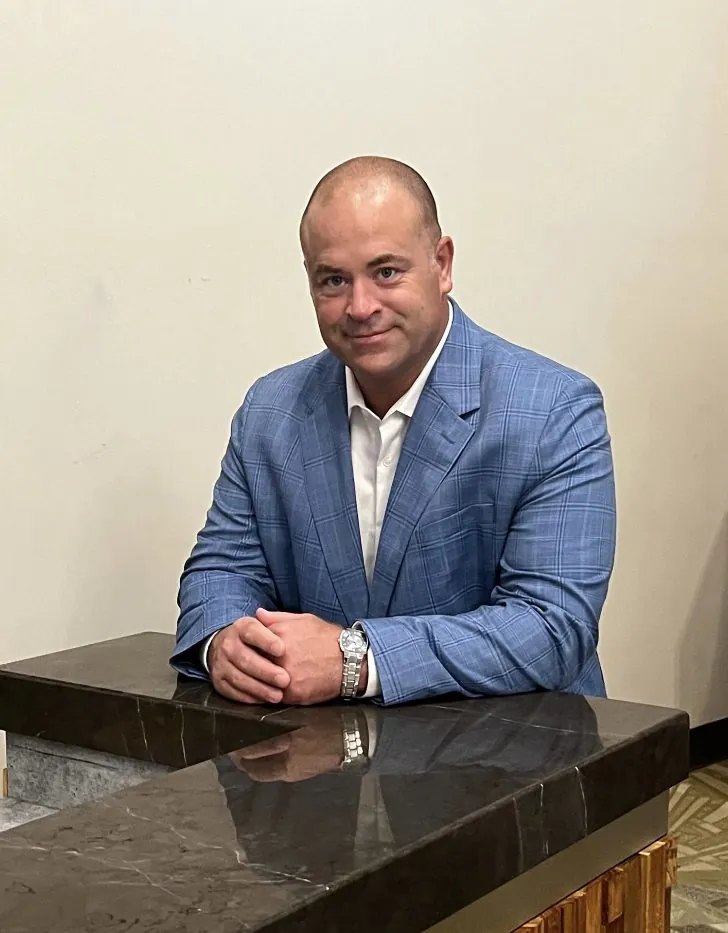
Carson Jones
Carson Jones is the host of Carson's Corner: Commercial Real Estate, author of The Red Flag Playbook, a licensed commercial real estate advisor and business broker, and the founder of Passive Investments. With 18 years of experience as an entrepreneur and 12 years specializing in passive investing, Carson works with high-net-worth individuals, family offices, business owners, and sophisticated investors as a broker and principal.
Carson holds a BBA in Finance from Baylor University and his Tennessee commercial real estate license (#382989). He actively pursues acquisition and equity opportunities across the United States and abroad through a worldwide network of qualified buyers, family offices, institutional investors, and top-tier developers.