Every year roughly a quarter of a million private businesses change hands in the United States, and every year tens of thousands of business owners write seven- and eight-figure checks to the IRS that they did not have to write. The sale of a business is usually the largest single financial event in the owner's lifetime — and the one in which the gap between a well-planned exit and a naive exit produces the widest dollar spread. This guide is the full operator's manual for 2026: how businesses are actually valued, how deals are structured, what buyers pay, how to finance an acquisition, and how a seller can roll a capital gain into a Qualified Opportunity Fund to defer tax today and — if the investment is held for ten years — eliminate the tax on appreciation entirely.
The 2026 M&A market has normalized after the post-pandemic boom and the 2023 rate shock. Dry powder sits at near-record levels at the large private equity funds. SBA lending has snapped back to its pre-pandemic rhythm after an extraordinary run through 2021 and 2022. Roll-up strategies in home services, veterinary clinics, landscaping, accounting, dental, and HVAC are driving a continuous bid for lower middle market quality assets. Interest rates are lower than their 2023 peak but higher than the decade-long zero-rate norm, which means debt-financed buyers underwrite more carefully and quality still commands premium multiples. For both buyers and sellers, disciplined planning on valuation, structure, tax, and integration is the difference between a transaction that works and one that unwinds.
The 2026 M&A Market in Plain English
Business M&A in 2026 is healthy but selective. Aggregate middle market deal volume is materially above the 2023 trough and close to the 2019 baseline. The industry is defined by five realities every buyer and seller should understand.
Multiples have held at the quality end, compressed at the commodity end. High-quality businesses in durable sectors (home services, healthcare services, specialty manufacturing, niche B2B software, platform-level lower middle market) continue to command EBITDA multiples close to their pre-rate-shock peaks. Commodity or owner-dependent businesses with weaker recurring revenue have compressed roughly 1.0–1.5 turns of EBITDA from peak.
Quality of earnings is now table stakes. Even for lower middle market deals under $10 million of EV, most institutional and strategic buyers now require a sell-side or buy-side QoE. Sellers who bring a sell-side QoE into the process close more often, at tighter terms, and with fewer post-close disputes.
Seller financing is back in a big way. In the SBA and lower middle market segment, seller notes for 10%–25% of deal value have returned to standard practice after the tighter-money period of 2023. For the seller, this is both a valuation tool (expanding the buyer pool) and a tax tool (spreading gain recognition under Section 453).
Private equity roll-ups continue to dominate. Home services (HVAC, plumbing, electrical, roofing), professional services (accounting, dental, veterinary, ophthalmology), specialty distribution, insurance brokerage, and an increasing number of B2B services verticals are all being actively consolidated by platform-backed acquirers. These platforms typically pay 7x–10x EBITDA for add-on acquisitions and 9x–14x for platforms — well above what a strategic or individual buyer would pay for the same target on a standalone basis.
The Opportunity Zone program has been reopened on more favorable terms. The One Big Beautiful Bill Act (OBBBA) made the QOF structure permanent with new zone designations effective January 1, 2027. For business sellers facing a large capital gain, the QOF path has become structurally more attractive than at any point since the original 2017 rollout. Discussed in detail below.
What this means for you
If you are a seller, the 2026 window is open but it requires preparation. Expect buyers to demand quality of earnings, to negotiate holdbacks and earnouts more aggressively, and to walk away from process chaos. If you are a buyer, the market rewards discipline: underwriting carefully, bringing committed financing, moving on quality assets decisively, and doing the integration work after close. For both sides, the tax structure of the exit is increasingly the difference between a good deal and a great deal.
Deal Segments & Buyer Types
The M&A market is not a single market — it is at least five distinct markets, each with its own buyer pool, pricing logic, financing structure, and transaction mechanics.
1. Main Street (under ~$3M enterprise value)
Sole-proprietor and small-business transactions. Often valued on Seller's Discretionary Earnings (SDE) rather than EBITDA because owner compensation dominates the economics. Typical multiples of 2x–4x SDE. Buyer pool is individual operators, often financed through SBA 7(a) loans with personal guarantees. Business brokers dominate the listing side. Transaction timeline: typically 6–9 months from listing to close.
2. Lower Middle Market ($3M–$50M EV)
The heart of the private M&A market. Valued on EBITDA. Typical multiples 5x–9x depending on sector, growth, and recurring revenue. Buyer pool is a mix of PE platforms, PE add-ons, strategic acquirers, and independent sponsor / search fund buyers. SBA, bank mezzanine, and seller financing are all common. Transaction timeline: typically 5–9 months with a formal process.
3. Middle Market ($50M–$500M EV)
Traditional private equity and strategic acquirer territory. Valued on EBITDA; multiples typically 8x–14x in durable sectors. Investment banks lead the sell-side process. Financing is a mix of syndicated bank debt, private credit, and equity. Transaction timeline: typically 6–9 months.
4. Upper Middle Market and Large Cap ($500M+)
Bulge-bracket and elite boutique investment banks lead the process. Multiples depend heavily on sector, strategic fit, and competitive dynamic. Auction processes are normal. Equity capital is often international. Transaction timeline: 9–15 months for strategic auctions.
5. Search Fund and Independent Sponsor Deals
A growing segment: individual searchers (often MBA graduates) raise committed or uncommitted capital from investor groups to acquire a single business and operate it. Typical target size $2M–$20M EV, typically SBA or senior-debt financed with investor equity. Independent sponsors do the same at larger scale, bringing a pre-vetted deal to their capital partners on a deal-by-deal basis. For sellers of quality lower middle market businesses, these buyers often offer premium value and good operational continuity for employees.
How Businesses Are Actually Valued
Business valuation is more art than science, but it is a disciplined art. Three methods dominate in practice: the income approach, the market approach, and the asset approach. For an operating business with meaningful cash flow, the market approach (multiples of SDE or EBITDA) usually drives the conclusion. The income approach (discounted cash flow) is a check. The asset approach matters primarily for asset-heavy businesses or for businesses where going-concern value is negative.
The Market Approach: SDE vs. EBITDA
For main street businesses and owner-operator businesses, valuation is usually expressed as a multiple of Seller's Discretionary Earnings (SDE). SDE is, roughly, EBITDA plus the owner's salary, plus any non-business personal expenses run through the company, plus one-time items that do not represent ongoing cost. SDE captures the full cash flow available to a single owner-operator.
For lower middle market and larger businesses, valuation is expressed as a multiple of Adjusted EBITDA. Adjusted EBITDA is EBITDA normalized for owner compensation at market rate (for a non-owner manager replacement), one-time expenses, and non-operating items. The adjustments are the heart of the negotiation.
What Drives the Multiple
Within any sector, the specific multiple a business commands is driven by:
- Size. Bigger businesses command higher multiples. A $10M EBITDA business trades at a higher multiple than a $1M EBITDA business in the same industry.
- Growth. Historical and projected growth dramatically shapes multiples. A 15% organic grower earns meaningfully more than a flat business.
- Recurring revenue. Subscription, contract-based, or habit-based recurring revenue is worth materially more than project-based revenue.
- Customer concentration. A top-10 customer concentration above 25% typically triggers multiple compression or heavy earnout structuring.
- Gross margin. Higher gross margin correlates with higher multiple.
- Owner dependence. A business that runs without the owner is worth more than a business that requires the owner.
- Industry tailwinds. Sectors with structural demographic or secular tailwinds command premiums.
The Income Approach
A discounted cash flow analysis projects future cash flows and discounts them back at a weighted-average cost of capital. Useful as a reasonableness check on market-multiple valuations. For stable businesses, the DCF result should be within roughly 15%–25% of the multiple-based conclusion — a larger gap is a signal to review the assumptions on both sides.
The Asset Approach
Value based on the net fair market value of the business's assets and liabilities. Dominant only for asset-heavy, low-return businesses or for businesses being valued for liquidation. Rarely drives a going-concern valuation.
The single biggest dollar-value decision most business sellers make is not what the sale price is — it is the tax structure of the exit. A properly planned Opportunity Zone rollover or Section 1202 exclusion can turn a seven-figure tax liability into zero.
— Carson Jones, Passive Investments
Current Multiples by Industry
Multiples vary meaningfully by industry. The table below reflects observed transaction multiples for stabilized, lower middle market businesses ($2M–$20M EBITDA) in 2025–2026. Main street businesses typically trade at 50%–70% of these figures on an SDE basis.
| Industry Segment | Typical EBITDA Multiple | Notes |
|---|---|---|
| B2B SaaS / Vertical Software | 5x–18x (revenue-based at scale) | Multiples driven by recurring revenue, growth, and net retention. Premium placed on >90% NRR. |
| HVAC / Plumbing / Electrical | 6x–10x (add-on); 9x–13x (platform) | Roll-up sector. Service-contract recurring revenue lifts multiples meaningfully. |
| Home Services (Roofing, Landscaping, Pest) | 5x–9x | Recurring service plans and brand-driven lead flow drive the premium. |
| Dental / Veterinary / Medical Services | 7x–12x (clinic); 10x–15x (DSO/platform) | Consolidated roll-up markets. Single-location trades lower. |
| Insurance Brokerage | 8x–14x | Commission renewals treated as recurring. Highly acquisitive segment. |
| Accounting / Tax Services | 1.0x–1.5x revenue; 4x–7x EBITDA | Multiple compression below larger firm level. |
| Specialty Manufacturing | 5x–9x | Customer concentration and capex intensity drive range. |
| Distribution / Logistics | 4x–8x | Niche specialty distribution trades higher than commodity. |
| Professional Services (consulting, design) | 3x–6x | Owner-dependence typically caps multiple. |
| Franchise Operations (multi-unit) | 4x–8x | Franchisor approval process is transaction-critical. |
| E-commerce / DTC | 2x–6x SDE; 4x–8x EBITDA | Brand strength, platform dependency, and retention drive range. |
| Restaurants / Hospitality | 3x–6x EBITDA | Multi-unit and franchise trade higher than single-unit. |
Two observations. First, within any industry the spread between a well-prepared, diligenced, and represented sale and a casual sale is typically 1.0–2.0 turns of EBITDA — which on a $5M EBITDA business is $5M–$10M of enterprise value. Second, the industries with the highest multiples are the industries with the most active private equity platforms — and the platforms will happily pay their platform multiple for a quality add-on, while an individual buyer would pay far less for the same target.
Asset Sale vs. Stock Sale
The most important structural decision in any business transaction is whether it is an asset sale or a stock sale. The economic, tax, and risk implications differ fundamentally for both buyer and seller.
The Asset Sale
The buyer purchases specific assets (equipment, inventory, intangibles, customer lists, goodwill) and specific assumed liabilities. The legal entity remains with the seller and is typically wound down post-close. Buyers prefer asset sales because: (a) they get a stepped-up basis in the acquired assets, producing future depreciation and amortization shields; (b) they inherit fewer historical liabilities; (c) they can cherry-pick which assets to acquire. Sellers typically disfavor asset sales because: (a) gains are frequently taxed at blended rates (including ordinary income on inventory, equipment depreciation recapture, and other non-capital-gains items); (b) the selling entity must pay its own tax (if a C corp, creating a double-tax problem); (c) the seller retains wind-down responsibility.
The Stock Sale
The buyer purchases the equity of the legal entity. The entity continues to exist post-close under new ownership, carrying all of its historical assets and liabilities. Sellers typically prefer stock sales because: (a) gain is generally taxed at capital gains rates only (federal 20% plus NIIT 3.8% plus state); (b) no double-tax for C corps; (c) the seller walks away cleanly with no wind-down. Buyers typically disfavor stock sales because: (a) no step-up in asset basis, so no additional depreciation or amortization shield; (b) the buyer inherits all historical liabilities, known and unknown.
The Section 338(h)(10) Election and Related Structures
For acquisitions of S corporations and qualifying subsidiaries of consolidated groups, Section 338(h)(10) allows a stock sale to be treated as an asset sale for tax purposes — giving the buyer a step-up in basis while still using stock sale mechanics legally. This is one of the most common structures for lower middle market PE transactions. The seller is typically compensated for the higher tax cost through a price adjustment (often called a "gross-up"). Related structures include Section 336(e) elections and F reorganizations, each addressing specific entity types.
The Tax Math That Shapes the Decision
For an S corporation, the asset-versus-stock distinction often matters less than it appears because the single layer of tax flows through regardless. For a C corporation, the distinction is enormous — an asset sale creates corporate-level tax plus shareholder-level tax at distribution, while a stock sale is taxed only at the shareholder level. For C corp owners, this double-tax concern often drives the entire deal structure.
The Sell-Side Process
A professional sell-side process typically runs 6–9 months from engagement to close for lower middle market transactions. Disciplined sellers use that window to maximize competitive tension and fiduciary value.
Pre-Process: The Preparation Year
The highest-ROI sell-side work happens in the 12 months before the banker is even engaged. Clean up financial reporting (monthly close, accrual accounting, separate entity presentation). Identify and normalize addbacks. Document customer concentration, pricing history, supply chain, key employee roles, and management depth. Commission a sell-side quality of earnings study. Identify the 2–3 strategic rationales a buyer might underwrite (platform, geographic expansion, capability add, roll-up).
The Process
Engagement with a banker or broker typically produces: a confidential information memorandum (CIM); a curated buyer outreach list; indications of interest (IOIs) from the buyer pool; an initial-round selection; management presentations; letter-of-intent (LOI) negotiation; exclusivity; confirmatory due diligence; definitive agreement negotiation; and close. A quality banker produces meaningful value at multiple steps — not just the initial outreach.
Buyer Outreach Strategy
The buyer outreach list usually falls into three buckets: strategic acquirers (direct competitors, adjacent operators, logical platform buyers); financial acquirers (PE platforms, add-on targets, independent sponsors); and individual buyers (search funds, family offices, individual operators). The optimal mix depends on the business — a pure financial process produces good financial multiples, a pure strategic process sometimes produces premium prices but limited optionality. A hybrid process generally produces the best outcome.
The Buy-Side Process
For buyers, the process is a mirror image — sourcing, evaluation, diligence, financing, close, and integration.
Sourcing
Quality targets are not typically found on the open market. Most platform acquirers maintain proactive outreach campaigns — often through business-development teams, relationships with brokers and bankers, and occasionally through direct owner outreach campaigns. For independent sponsors and search funds, sourcing discipline is the single biggest predictor of long-term success.
Evaluation and LOI
A disciplined buyer moves from initial evaluation to an LOI within 2–6 weeks of first introduction. The LOI should be substantive — covering price, structure, key working-capital assumptions, exclusivity period, financing contingency, and headline representations. A weak LOI invites re-trading later.
Confirmatory Diligence
After LOI, the buyer runs 45–75 days of confirmatory diligence: financial and tax due diligence (usually buy-side QoE), legal diligence, commercial diligence, HR/benefits, technology, environmental (where relevant). Any material surprise in diligence produces a conversation — either a price adjustment, an escrow or indemnification change, or a walk.
Financing and Close
For SBA-financed deals, the SBA loan process runs in parallel with diligence and typically takes 60–90 days. For private credit and bank debt, commitment letters are typically locked with the LOI. For equity-only or search-fund deals, LP consent processes add time. A well-run process closes within 120 days of LOI execution.
Quality of Earnings and Due Diligence
The quality of earnings (QoE) has become the single most important diligence exercise in private M&A. A QoE is an engagement-led analysis, typically by a top-tier accounting firm or specialist practice, that confirms the seller's reported EBITDA, identifies normalizing adjustments, and produces a defensible Adjusted EBITDA number for purposes of valuation and financing.
What a QoE Actually Does
A QoE typically reviews 36 months of financial data, tests revenue cutoffs and recognition, tests gross margin trends, reconciles management-reported EBITDA to accounting records, identifies and documents addbacks, reviews working capital normalization, and flags any accounting positions that are aggressive or inconsistent with industry practice. The final output is a report defensible to lenders, PE limited partners, and sophisticated buyers.
Sell-Side QoE vs. Buy-Side QoE
A sell-side QoE is commissioned by the seller before going to market. A buy-side QoE is commissioned by the buyer during confirmatory diligence. The two have become complementary — sophisticated sellers use a sell-side QoE to set the table; sophisticated buyers use a buy-side QoE to test it. For most lower middle market deals above $5M of EV, both are now expected.
Legal, Tax, Commercial, and HR Diligence
Full confirmatory diligence typically includes: legal review (entity good standing, contracts, litigation, IP, employment, real estate, insurance, data privacy); tax diligence (compliance history, uncertain tax positions, transfer pricing where relevant, sales tax, payroll tax, state nexus); commercial diligence (customer contracts, retention, pricing power, competitive dynamics); HR diligence (compensation structure, benefits liabilities, key-employee retention, independent contractor classification); technology diligence (stack, cybersecurity, data integrity). On deals with operational complexity, specialist diligence providers often handle each lane.
Financing Acquisitions in 2026
Business acquisition financing breaks into four dominant structures, with meaningful variation across the deal-size spectrum.
1. SBA 7(a) Loans
The dominant financing for main street and lower end of the lower middle market (deals under $5M of EV, with a new SBA loan cap of $5M for acquisitions). Non-recourse above the personal guarantee, 10-year amortization (25-year for real estate), typical rate Prime plus 2.75%–3.0%. Requires owner-operator structure and personal guarantee from 20%+ owners. SBA 7(a) remains the best financing available for individual operators acquiring businesses under $5M EV.
2. SBA 7(a) with Seller Note
A common structure: 80%–85% SBA debt, 10%–15% seller note on standby, 5%–10% buyer equity. The seller note is typically interest-only for 2 years, then amortizing, with a small below-market coupon and a subordination agreement. The structure allows the buyer to close with minimal equity and the seller to spread gain recognition. For sellers, the seller-note component is also the gateway to Section 453 installment treatment.
3. Bank Senior Debt and Unitranche Private Credit
For lower middle market and middle market deals ($10M–$250M EV), the senior debt stack is typically provided by a commercial bank (syndicated senior) or a private credit fund (unitranche). Leverage typically 3.0x–5.5x trailing EBITDA depending on sector, recurring revenue, and borrower quality. Private credit has dominated this space since 2020, with deep liquidity and faster execution than syndicated bank debt.
4. Seller Financing (Seller Notes)
In lower middle market deals, 10%–25% of enterprise value is frequently provided by the seller in the form of a seller note. Terms vary — interest rates typically 5%–8%, 3–7 year maturity, with varying amortization and subordination profiles. For the seller, this is both a valuation tool (widening the buyer pool) and a tax tool (Section 453 installment sale treatment spreading gain recognition over the life of the note). A seller note can also serve as a mechanism to bridge a valuation gap.
5. Rollover Equity
Particularly common in PE-backed transactions, the seller "rolls" a portion of the proceeds into equity in the post-close entity. Typical rollover is 10%–30% of proceeds. Two benefits: (a) it provides the PE buyer with operating continuity and aligned incentives; (b) it provides the seller with a "second bite at the apple" when the PE buyer sells the business 3–7 years later, often at a significant step-up. The rolled equity is typically tax-deferred if the structure meets Section 351 or similar non-recognition provisions.
Earnouts, Escrows, and Holdbacks
Deal structure in 2026 increasingly involves payment delays and contingencies. Three structures are standard.
Earnouts
A portion of the purchase price is paid contingent on post-close financial performance over a defined measurement period. Typical earnouts are 10%–30% of total consideration over 1–3 years post-close. Earnouts are useful when buyer and seller cannot agree on valuation based on historical performance — the earnout effectively shares the risk of forward projection. Well-drafted earnouts specify metrics clearly (typically revenue or EBITDA), provide the seller with meaningful influence over operations during the earnout period, and include anti-frustration covenants protecting the seller from buyer decisions that would impair the metric.
Indemnification Escrows
A portion of proceeds (typically 5%–10%) is held in escrow at close to secure the seller's indemnification obligations on representations and warranties. Release schedule typically 12–24 months post-close, timed to expire of the reps and warranties. Representation and warranty insurance has largely replaced escrow on deals above $10M EV, transferring the economic risk to an insurer.
Working Capital Adjustments
Deal terms typically specify a target net working capital at close, with a post-close true-up. The working capital peg is often one of the most contentious items in the negotiation — a $500,000 working capital adjustment is real money that can materially shift the economic outcome of an otherwise agreed deal. Both sides should engage their financial advisors on the working capital calculation well before the LOI.
Seller Tax Strategy — The Menu
The tax structure of a business sale is the single highest-leverage decision most sellers make. Multiple legitimate strategies exist to defer, reduce, or eliminate federal capital gains tax on a business sale. The right combination depends on entity type, holding period, gain size, and the seller's post-sale plans.
Overview of the Menu
- Qualified Opportunity Zone Fund (QOF). Defers the gain, steps up basis after 5 years, eliminates tax on post-investment appreciation after 10 years. Discussed in detail below — this is the central focus of this guide.
- Section 1202 QSBS Exclusion. For qualifying C corporation stock held over 5 years, excludes up to the greater of $10M or 10x basis from federal tax entirely. Discussed in detail below.
- Installment Sale (Section 453). Spreads gain recognition over years as payments are received under a seller note. Reduces bracket-stacking and provides post-sale income.
- Charitable Remainder Trust (CRT). Contribute stock to a CRT before sale; the trust sells tax-free; seller receives income for life or term of years; remainder goes to charity.
- ESOP Sale. Sell to an employee stock ownership plan; Section 1042 allows deferral of gain if proceeds are reinvested into qualified replacement property.
- Rollover Equity (Section 351). Defer a portion of the gain by rolling equity into the post-close entity on tax-deferred terms.
- Wait and Die. For older owners, holding until death produces a step-up in basis eliminating all capital gain.
Multiple strategies can be — and frequently are — combined. A typical well-planned exit uses a sell-side QoE, an installment note for a portion of proceeds, a QOF rollover for most of the remaining cash gain, and rollover equity for a portion that stays in the post-close entity. The cumulative tax reduction can be enormous.
Opportunity Zones: The Seller's Playbook
The single most powerful post-2017 addition to the business seller's tax toolkit is the Qualified Opportunity Zone (QOZ) program. For owners facing a large capital gain from the sale of a business, rolling the gain into a Qualified Opportunity Fund (QOF) can defer the tax for years, step up the basis on the original gain, and — critically — eliminate federal tax entirely on any appreciation of the QOF investment if held for ten years or more. Following the One Big Beautiful Bill Act (OBBBA), the program has been made permanent with new zone designations and a refreshed rule set effective January 1, 2027.
How the Mechanics Work
Within 180 days of a triggering capital gain (such as the closing of a business sale), the seller invests an amount up to the gain into a Qualified Opportunity Fund — a fund structured to invest 90%+ of its assets into qualifying businesses or qualifying properties located in a designated Opportunity Zone. The 180-day clock starts at the sale closing date (with favorable elections available for pass-through entities that can extend the window meaningfully).
Three distinct tax benefits flow from the investment:
- Gain deferral. Recognition of the original capital gain is deferred until the earlier of (a) sale of the QOF interest or (b) the applicable statutory recognition date. Under the OBBBA framework, the new five-year rolling deferral model provides a structured glide path for deferred recognition.
- Basis step-up on the deferred gain. If the QOF interest is held for five years, 10% of the original deferred gain is permanently excluded (the basis in the investment is stepped up by 10% of the deferred gain). The OBBBA adjusted the step-up structure relative to the original 2017 rules.
- Full elimination of tax on QOF appreciation after 10 years. This is the headline benefit. If the QOF investment is held for ten years or more, the basis in the investment is stepped up to its fair market value on the sale date — meaning any appreciation during the ten-year hold period is entirely tax-free at the federal level. No capital gains tax, no net investment income tax. For a seller who invests $10M into a QOF that grows to $30M over ten years, the $20M of appreciation is fully tax-free.
What Qualifies as a QOF Investment
A Qualified Opportunity Fund must invest 90%+ of its assets in Qualified Opportunity Zone Property — which can be: (a) Qualified Opportunity Zone Business Property (tangible property used in a trade or business within a designated Opportunity Zone); (b) Qualified Opportunity Zone Stock (stock of a domestic corporation operating predominantly within a zone); or (c) Qualified Opportunity Zone Partnership Interest (partnership interest in a partnership operating predominantly within a zone).
Critically for business-sale scenarios, QOFs can invest in operating businesses located in Opportunity Zones — not just real estate. This is the feature that distinguishes the QOF from a 1031 exchange and makes it a natural fit for business sellers who do not want to redeploy into real estate.
Real Estate vs. Operating Business QOFs
Two primary QOF archetypes exist: real estate QOFs (acquiring and substantially improving property in a zone) and operating business QOFs (acquiring or starting operating businesses in a zone). Both qualify; both offer the three-tier tax benefit. The right choice depends on the seller's risk tolerance, liquidity needs, and familiarity with the underlying asset class.
The Substantial Improvement Requirement
Real estate QOFs investing in existing buildings must substantially improve the property — investing an amount equal to the basis of the building (excluding land) in improvements within 30 months of acquisition. This rule is intentionally strict to require the capital to actually benefit the zone rather than simply sit in passive real estate ownership. OBBBA adjusted the specific calculation; the core requirement remains.
OZ 2.0 Under OBBBA
The One Big Beautiful Bill Act made the Opportunity Zone program permanent with several key changes effective January 1, 2027: a refreshed map of designated zones (meaningful churn from the 2017 designations); a rolling deferral structure; updated basis step-up rules; enhanced reporting requirements; and targeted anti-abuse provisions. The net effect is a more durable, more flexible, and more permanent framework than the original 2017 program. For business sellers in 2026 and 2027, this creates a planning environment more favorable than at any point since the program was first introduced.
Why OZ Beats Other Options for Most Business Sellers
A QOF investment held for 10+ years is the only standard deferral structure in the Internal Revenue Code that genuinely eliminates (rather than merely defers) federal capital gains tax on appreciation of the reinvested amount. An installment sale spreads gain recognition but does not eliminate it. A 1031 exchange is available only for real estate, not business sales. A CRT eliminates tax but requires charitable intent. The only direct alternative that also fully eliminates tax is Section 1202 QSBS — but 1202 applies only to qualifying C-corp stock held for 5+ years with a narrower set of preconditions. For most business sellers who do not qualify for 1202 (S corp sellers, recent acquirers, sellers above the 1202 cap), the QOF is the single most powerful tax-reduction tool available.
Combining QOF with Other Strategies
QOF works beautifully in combination with other strategies. A typical combined exit: retain 20% of proceeds for immediate use and cash management (taxable); invest 60% into a QOF (deferring recognition, stepping up basis, eliminating appreciation tax); take 20% in seller financing on installment terms (spreading gain under Section 453). The cumulative federal tax on a $10M gain in this structure can fall from $2.4M (standard 20% LTCG + 3.8% NIIT) to under $400K over the full deferral and elimination period.
QOF Risks and Considerations
QOFs are illiquid during the hold period. The 10-year hold requirement for full appreciation elimination is meaningful — early liquidity is penalized by loss of the appreciation-elimination benefit. QOF sponsor quality varies enormously; a well-structured QOF with an institutional sponsor is a different instrument than a thinly-capitalized boutique fund. Due diligence on sponsor, fund structure, underlying asset plan, reporting capability, and liquidity provisions is essential. Accredited-investor restrictions apply to most QOF offerings.
Section 1202 QSBS Exclusion
Section 1202 — often called the Qualified Small Business Stock exclusion — is one of the most powerful tax provisions for founders and early employees of qualifying C corporations. For eligible stock held for five years or more, Section 1202 excludes from federal tax the greater of $10M or 10x the taxpayer's basis in the stock.
Who Qualifies
QSBS treatment requires: (a) the issuer is a domestic C corporation; (b) the corporation has gross assets of $50M or less at the time the stock was issued (this threshold was increased to $75M by OBBBA for stock issued after July 4, 2025); (c) the stock was acquired at original issuance (not purchased from a prior shareholder); (d) the corporation is engaged in a qualified trade or business (excluding specified service businesses like law, health, consulting, financial services, and farming); (e) the stock has been held for five years or more at sale (OBBBA introduced a partial exclusion starting at three years for stock issued after July 4, 2025).
The Dollar Math
For a founder with $0 basis in QSBS, the $10M exclusion is substantial. For a founder with meaningful basis (common in capital-intensive businesses), the 10x basis multiplier can produce exclusions far larger than $10M. A founder with $3M of basis who sells for $30M can exclude the full $30M under the 10x basis provision. QSBS can also be "stacked" through gifting to family members and non-grantor trusts, each of whom has their own $10M / 10x basis exclusion.
OBBBA Enhancements
OBBBA significantly expanded QSBS: the gross-assets threshold rose from $50M to $75M for post-July 4, 2025 issuances; the per-issuer exclusion cap rose from $10M to $15M (indexed); a new partial exclusion begins at 3 years (50%), scales to 75% at 4 years, and full 100% exclusion at 5 years. Each of these changes materially expands the taxpayer pool eligible for the provision and the dollar benefit available.
QSBS vs. QOF
QSBS and QOF are not competing strategies — they address different situations. QSBS applies only to qualifying C corp stock held for the requisite period. QOF applies to any capital gain from any source, rolled within 180 days of recognition. For a seller of qualifying C corp stock, the best outcome is often both: exclude the QSBS-eligible portion under Section 1202, then roll any gain above the 1202 cap into a QOF for further deferral and elimination.
Installment Sale and Seller Notes
Section 453 allows gain recognition on a sale to be spread over the years in which payments are received. For a seller taking back a 5-year seller note representing 25% of deal value, only the cash received at close produces immediate gain recognition; the balance is recognized as note payments are received.
Why Installment Treatment Matters
Installment treatment accomplishes three things. First, it spreads gain recognition across multiple tax years, keeping the seller out of the highest marginal bracket in the year of sale. Second, it provides continuing income through note payments — a retirement income stream secured by the business. Third, it creates ongoing skin-in-the-game alignment with the buyer, often improving the buyer's operating discipline during the integration period.
Limitations
Installment treatment does not apply to the full sale — recapture items (depreciation recapture, inventory, accounts receivable) must be recognized immediately. Installment treatment also does not fully defer tax; it merely spreads recognition. For sellers with concerns about marginal rate exposure over time or with concerns about future rate increases, installment treatment is sometimes less attractive than an immediate full recognition paired with an OZ or QSBS rollover.
The Seller's Interest-Rate Decision
A seller note can be structured with a below-market coupon (with corresponding imputed interest treatment) or at market. The balance-sheet economics of a seller note are highly dependent on interest rate structure, principal amortization, and security. Well-drafted seller notes are subordinated to senior acquisition debt but remain secured by equity pledges and key operating covenants.
ESOP Exits
An employee stock ownership plan (ESOP) is a qualified retirement plan that holds stock of the employer for the benefit of employees. For qualifying owners, selling stock to an ESOP provides substantial tax benefits and a clean succession path.
The Section 1042 Tax Deferral
If a shareholder of a C corporation sells at least 30% of the company's stock to an ESOP and reinvests the proceeds into qualified replacement property (generally marketable securities of US operating companies) within 12 months, Section 1042 allows indefinite deferral of the gain. Held to death, the qualified replacement property receives a step-up in basis, permanently eliminating the gain. For the right seller profile, this is a powerful outcome.
When ESOP Is the Right Exit
ESOP exits work well for companies with: (a) a mature, stable cash flow profile that can service ESOP-related debt; (b) a management team prepared to run the business long-term without the founder; (c) a seller with strong legacy motivation toward employees; (d) a willingness to work with the complexity of ESOP administration, repurchase obligations, and ongoing fiduciary requirements.
ESOP Drawbacks
ESOP transactions are complex, with specialist counsel, trustee oversight, valuation fiduciary requirements, and ongoing annual administration. The exit is often at book-value-discounted fair market value rather than strategic multiple. Repurchase obligations from departing employees create a long-term balance-sheet commitment. ESOPs do not fit every business — for most owners considering ESOP, the exercise of modeling the ESOP outcome side-by-side with a third-party sale plus QOF rollover is worth the effort.
Charitable Remainder Trust
A charitable remainder trust (CRT) is a split-interest trust structure where the grantor contributes an appreciated asset to the trust before sale; the trust sells the asset without immediate tax (because the trust is tax-exempt); the trust pays an income stream to the grantor for life or a term of years; and the remainder passes to designated charities at termination.
The Tax Mechanics
Contribution of the appreciated asset to the CRT is not a taxable event. Sale within the CRT is not subject to immediate tax. Income distributed to the grantor is taxed under the trust's complex four-tier system, which generally produces a more favorable blended rate than immediate full recognition. The grantor receives an immediate charitable deduction equal to the present value of the remainder interest passing to charity.
When CRT Is the Right Structure
CRTs fit sellers with: (a) meaningful charitable intent; (b) tolerance for permanent loss of principal access (the remainder will pass to charity); (c) desire for lifetime income from the asset's proceeds; (d) a large enough gain that the immediate tax on a straight sale would be economically meaningful. CRTs are not a pure tax-planning vehicle — they require genuine charitable motivation.
Buyer Tax Strategy
Buyers focus on different tax levers than sellers. The primary buyer concerns are: acquisition structure (asset vs. stock vs. 338(h)(10)); basis step-up and the resulting depreciation and amortization shield; deductibility of transaction costs; and post-close structuring of the entity for ongoing operations.
The Asset Sale Basis Step-Up
In an asset sale, the buyer's basis in the acquired assets equals the purchase price as allocated across the assets. This produces a stepped-up basis in depreciable property (often driving meaningful post-close depreciation deductions) and a stepped-up basis in amortizable goodwill (amortized straight-line over 15 years under Section 197). For most acquisitions, this is the single largest tax benefit the buyer captures.
The Section 338(h)(10) Election
For qualifying stock acquisitions of S corporations or consolidated-group subsidiaries, the 338(h)(10) election treats the transaction as an asset sale for tax purposes while preserving stock-sale legal mechanics. The buyer captures the step-up; the seller pays the incremental tax; the deal price is typically adjusted to compensate. Well-modeled, the buyer captures more basis step-up than the seller pays in incremental tax.
The F Reorganization
For S corporation targets where a 338(h)(10) is not the optimal structure, a pre-close F reorganization can convert the S corporation into an LLC and enable asset-sale tax treatment through a qualifying rollover structure. This is a specialist area; coordination between buyer and seller counsel is essential.
Bonus Depreciation and Cost Segregation
OBBBA permanently restored 100% bonus depreciation for qualifying property placed in service after January 19, 2025. For acquired businesses with meaningful tangible property, the combination of an asset-sale step-up, cost segregation of the acquired real estate, and 100% bonus depreciation can produce very large first-year depreciation deductions — often sheltering most or all of the post-close cash flow in year one.
Reps, Warranties, and Indemnities
The representations, warranties, and indemnification provisions of the definitive agreement are where meaningful post-close economic risk is allocated between buyer and seller. Modern deals handle this through a combination of escrow, indemnification caps, and representation and warranty insurance.
Standard Representation Categories
Seller reps typically cover: organization and authority; capitalization; financial statements; absence of undisclosed liabilities; material contracts; tax; employee benefits; employment; intellectual property; data privacy; compliance with law; environmental; litigation; customer and supplier relationships. Each representation is a statement about a factual condition of the business at close.
Survival and Indemnification
Reps typically survive close for 12–24 months (general reps) or up to the relevant statute of limitations (fundamental reps, tax, IP). If a rep is breached and the buyer suffers losses, the seller indemnifies up to a negotiated cap (typically 10%–15% of deal value for general reps, with fundamental reps frequently uncapped or at a higher cap). A deductible (basket) protects against small claims.
Representation and Warranty Insurance
For deals above roughly $10M EV, R&W insurance has become standard. The buyer (or, less commonly, the seller) purchases an insurance policy that covers rep breaches, with a retention (deductible) typically 0.5%–1.0% of deal value. Cost is typically 3%–5% of the policy limit. The insurance effectively transfers the economic risk from the seller to an insurer, allowing sellers to walk away with minimal long-term liability exposure.
Post-Close Integration
The quality of post-close integration determines whether the deal thesis actually plays out. Most deal failures happen not at close but in the 6 to 18 months after.
The First-100-Days Playbook
Disciplined acquirers run a structured 100-day integration plan: leadership announcement within 24 hours; all-employee communication plan; customer communication plan; IT and systems integration milestones; HR and benefits harmonization; financial system migration; operational KPI tracking; synergy realization plan. Each workstream has a named owner and a defined milestone schedule.
Retention of Key Employees
The single highest-risk item in most integrations is the loss of key employees in the first 18 months. Retention bonuses, equity rollover, post-close compensation structure, and cultural alignment are all important. The smartest acquirers begin retention conversations during diligence, not post-close.
The Seller's Transition Role
For deals where the seller remains involved post-close — whether as an employee, board member, consultant, or rollover equity holder — the transition agreement is critical. A well-drafted transition agreement specifies the seller's post-close authority, non-competition scope, non-solicitation scope, compensation, and termination provisions. Misalignment on transition terms is one of the most common sources of post-close disputes.
Real Owner Scenarios with Dollar Math
The $12M Business Sale Rolled Into a QOF
A 62-year-old owner has built a specialty distribution business over 24 years. Business is a pass-through S corporation. Trailing twelve months Adjusted EBITDA: $2.0M. Sold to a PE add-on buyer for $12M enterprise value (6x multiple). After closing costs, net proceeds: approximately $11.4M. Seller's basis in the business: approximately $400,000. Gain on sale: approximately $11.0M (mostly long-term capital gain, some inventory and recapture at ordinary).
A standard taxable sale would produce federal tax of approximately $2.2M (20% LTCG plus 3.8% NIIT plus ordinary income on recapture) plus state tax, for a combined tax bill of roughly $2.7M.
The strategy: Invest $8.5M of the capital gain portion into a Qualified Opportunity Fund within 180 days of close. Take $2.5M in cash for immediate use. Defer the $8.5M of gain under OZ rules. Hold the QOF for 10+ years, receiving a step-up to FMV on the QOF interest at year 10. The original deferred gain comes due on the applicable recognition date (with basis step-up reducing the amount recognized). All appreciation on the QOF investment during the 10-year hold is permanently excluded from federal tax.
If the QOF grows to $17M over the 10-year hold (a 7.2% annualized return), the $8.5M of appreciation is fully tax-free at the federal level — saving approximately $2.0M of federal tax on the appreciation alone, plus the time-value benefit of deferring the original gain.
The $35M C-Corp Founder — QSBS Plus QOF Combined
A founder built a B2B SaaS business over 8 years as a C corporation from the outset. All founder stock is qualifying QSBS. Founder's basis: $250,000. Business sells for $35M (all stock sale, meeting 1202 requirements). Gain on sale: $34.75M.
A straight taxable sale would produce federal tax of approximately $6.95M (20% plus 3.8% NIIT) plus state tax.
The strategy: Apply Section 1202 QSBS exclusion up to the greater of $15M or 10x basis. Since 10x basis ($2.5M) is less than $15M, the cap is $15M of exclusion. Exclude $15M of the gain entirely from federal tax. Roll the remaining $19.75M of gain into a QOF within 180 days of close. Hold the QOF 10+ years. The $15M of QSBS gain is gone for federal purposes; the $19.75M of QOF-invested gain is deferred, partially stepped-up, and has fully tax-free appreciation for the 10-year hold period.
Combined federal tax outcome: the $15M QSBS slice is entirely excluded. The $19.75M QOF slice produces deferred (and partially reduced) recognition of the original gain only, with all appreciation tax-free. Cumulative federal tax savings vs. a straight sale: in the range of $3.5M–$4.5M.
The SBA Buyer Acquires a Main Street Business
A 38-year-old individual buyer acquires a HVAC service business with $650,000 SDE for $2.1M (3.2x SDE). Structure: 85% SBA 7(a) senior debt ($1.785M), 10% seller note ($210,000) subordinated to SBA, 5% buyer equity ($105,000). Seller note: 6% fixed coupon, 2-year interest only, then 5-year amortization, subordinated standby.
The buyer's economics: SBA debt service in year one approximately $235,000 against SDE of $650,000. After SBA debt service, seller note interest, and replacement manager compensation at $75,000, available cash flow to the buyer in year one is approximately $215,000 on $105,000 of committed equity — a 205% cash-on-cash return in year one. The buyer owns 100% of a business generating stable cash flow, with the SBA note on a 10-year amortization and meaningful upside from operational improvements.
The seller's economics: Cash at close approximately $1.89M. Seller note of $210,000 pays 6% interest for 7 years. Gain on sale is recognized over 7 years as note payments are received (Section 453 installment treatment), smoothing the tax bracket exposure. Net present value of the note approximately $175,000. Total consideration value approximately $2.065M in present value terms.
The PE Rollover Equity "Second Bite"
A 54-year-old owner sells a healthcare services platform to a PE add-on at $40M EV (9x $4.4M EBITDA). Deal structure: 75% cash at close ($30M), 25% rollover equity into the post-close entity ($10M). Seller's basis in the business: $1M. Gain on the cash slice: $22M. Rollover equity is structured as Section 351 non-recognition (no gain recognized on the rolled portion).
The tax outcome at close: Gain recognition is $22M (the cash slice only). Seller pays approximately $5.3M of federal tax on the $22M gain. The $10M of rollover equity carries over the seller's basis and is not a taxable event at close.
Four years later: The PE owner sells the platform for $120M (having tripled EBITDA through a combination of organic growth and add-ons). The seller's rolled equity, now representing a proportional share of $120M, is worth approximately $22M at the second-bite exit. The seller has a second capital gain event on the rolled equity — but the original basis is preserved, and with proper structuring, the seller can roll the cash proceeds from the second bite into a QOF at that point, further extending and reducing the tax.
Ten Expensive Mistakes Buyers and Sellers Make
- Selling without a tax plan. Engaging a banker before engaging a tax advisor. By the time you are under LOI, most of the QOF, QSBS, ESOP, and CRT strategies have narrower or no windows. The tax planning conversation should precede the sell-side engagement by at least 6 months.
- Missing the 180-day QOF window. Sellers who learn about the Opportunity Zone strategy at close often have weeks, not months, to identify a QOF and complete the investment. The clock starts on the sale date (with limited extension elections for pass-through sellers). Plan the QOF deployment before the sale closes, not after.
- Failing to qualify for QSBS. Founders of C corporations with qualifying facts often leave the QSBS exclusion unclaimed at sale because their advisors never flagged it. A pre-sale 1202 memorandum from competent tax counsel is one of the highest-ROI documents in M&A — and it has to be prepared before close, not after.
- Running the sale without a sell-side QoE. Buyers discount sellers who do not show up with a defensible EBITDA number. A sell-side QoE typically costs $40,000–$120,000 depending on business size and returns multiples of that in improved pricing and fewer diligence disputes.
- Accepting a badly-structured earnout. Earnouts based on vague metrics, without anti-frustration protection, and without clear operational authority during the earnout period are frequently unpaid. Either negotiate the earnout carefully or avoid it entirely.
- Under-negotiating working capital. The net working capital peg can shift the deal economics by hundreds of thousands or millions of dollars. Both sides should model this carefully before LOI and revisit at definitive agreement.
- Confusing C-corp and S-corp tax treatment. Asset sales of S corps are generally well-tolerated by sellers. Asset sales of C corps produce double-tax and are generally untenable without significant price adjustment. Sellers who do not understand this distinction routinely accept deal structures that cost them seven figures.
- Undervaluing seller financing. Sellers who insist on 100% cash at close close at lower total consideration than sellers who accept a seller note. The note expands the buyer pool, improves pricing, and spreads gain recognition — three benefits for one structure.
- Skipping R&W insurance on deals where it is appropriate. For deals above ~$10M EV, R&W insurance is a near-standard benefit to both buyer and seller. Sellers with R&W insurance walk away with minimal post-close liability exposure; buyers with R&W insurance have clean recourse against an insurer rather than a dispersed seller group.
- Bad post-close integration. Buyers who close and then neglect the 100-day integration plan lose customers, employees, and operating discipline in the critical first year. Integration planning should begin at LOI, not at close.
Frequently Asked Questions
Why Planning Ahead Matters
Business sales reward advance planning more than nearly any other financial event in an owner's life. Sellers who begin the tax, structure, and succession conversations 12 to 24 months before the sale routinely achieve outcomes meaningfully better than those who wait until a letter of intent is in hand. Sellers who plan several years ahead — positioning for QSBS qualification, preparing the business operationally, and lining up QOF alternatives — can effectively eliminate the federal capital gains tax on a lifetime of accumulated value.
The most common regrets I hear from business sellers are variations on the same themes: sold without a tax plan; never evaluated QOF or QSBS; paid full tax when a deferral or elimination strategy would have applied; accepted a badly-structured earnout that never paid; stayed in the business two years too long because the exit structure was never planned. Each of these mistakes costs real money — often seven figures on a mid-sized transaction.
The planning window is always wider before the transaction than after. If you are looking at a pending decision — whether buying, selling, or structuring an exit — it is worth a conversation before the banker is engaged, before the LOI is signed, before the close date is scheduled. Most of these strategies require advance planning to execute well, and the difference between a well-planned exit and a reactive one is frequently the largest single-dollar financial outcome of an owner's life.
Schedule a Strategy Call
If you are preparing to buy or sell a business and want to understand your options — valuation, structure, tax strategy, Opportunity Zone rollovers, QSBS qualification, or post-close integration — reach out. Consultations are confidential and carry no obligation.
This article is for informational and educational purposes only and does not constitute tax, legal, investment, or financial advice. Every business and every owner's situation is unique. Tax laws are complex and change frequently; the One Big Beautiful Bill Act introduced several changes whose full regulatory implementation is ongoing. Always consult your CPA, M&A attorney, and financial advisor before making any financial, tax, or investment decisions. Qualified Opportunity Fund, Qualified Small Business Stock, and other tax-deferral strategies described in this article involve complex rules, eligibility tests, and execution requirements that cannot be reliably summarized in an educational guide. All investments carry risk, including the potential loss of principal. Qualified Opportunity Fund investments in particular are illiquid, generally restricted to accredited investors, and subject to the performance of the underlying assets. Market data, multiples, and other figures cited in this article reflect general market conditions as of early 2026 and may not be current or applicable to specific transactions. Past performance is not indicative of future results. Carson Jones, Passive Investments, and the author make no guarantees regarding the tax treatment, performance, or outcome of any specific transaction or strategy described in this article.
https://carsonscorner.media
Selling, buying, or raising capital? Let's talk.
Brokerage, equity participation, and capital partnerships for commercial real estate owners, investors, and family offices — nationwide, through the eXp Commercial platform.
Carson Jones
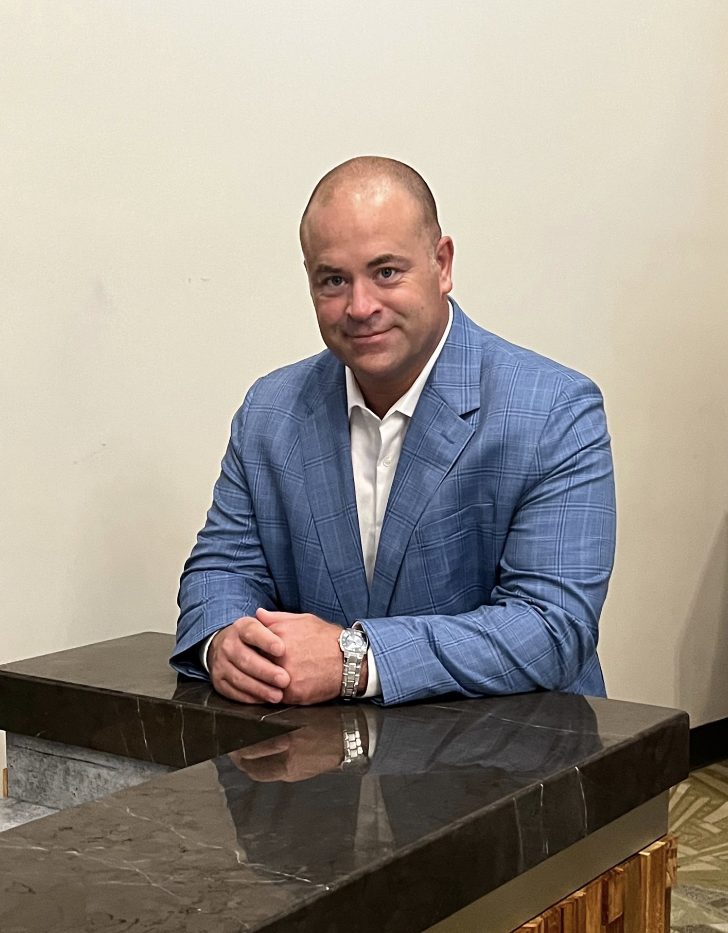
Carson Jones is the host of Carson's Corner: Commercial Real Estate, author of The Red Flag Playbook, a licensed commercial real estate advisor and business broker, and the founder of Passive Investments. With 18 years of experience as an entrepreneur and 12 years specializing in passive investing, Carson works with high-net-worth individuals, family offices, business owners, and sophisticated investors as a broker, principal, and capital partner.
Carson holds a BBA in Finance from Baylor University and his Tennessee commercial real estate license (#382989). He actively pursues acquisition and equity opportunities across the United States through a nationwide network of qualified buyers, family offices, institutional investors, and top-tier developers.