Most industrial buyers walk away from contaminated property because nobody explained what the report actually said. This guide covers what a Phase I finds, what a Phase II costs you in negotiation, who is liable for contamination you did not cause, and how buyers structure around environmental risk instead of running from it.
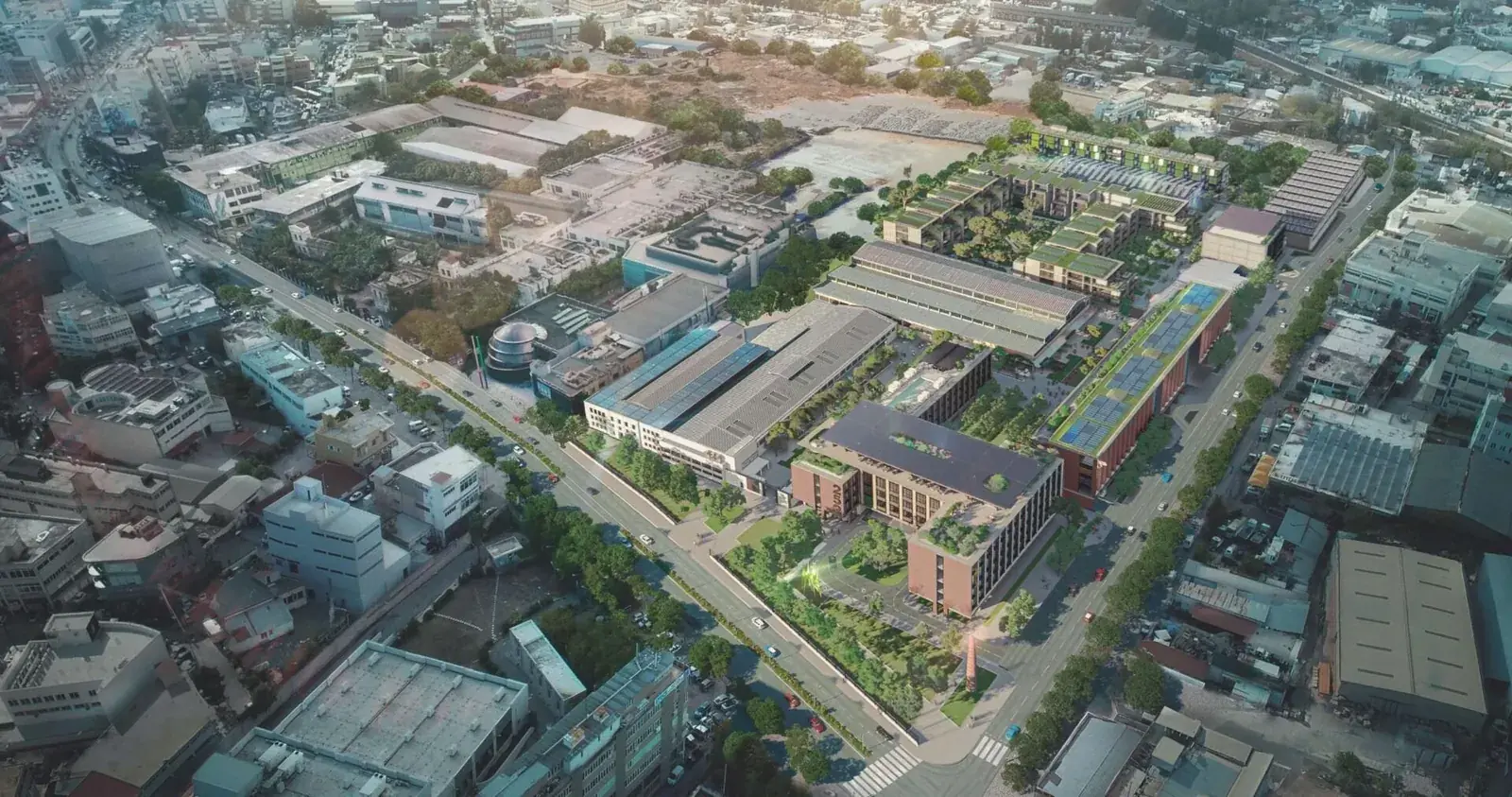
The short version: A brownfield is a property whose redevelopment is complicated by real or perceived contamination. Real or perceived is the operative phrase — a large share of brownfield discounts are priced off fear rather than off a measured cleanup number. Federal law since 2002 has offered buyers a way out of inherited liability through the bona fide prospective purchaser defense, provided you do your investigation before you close, not after. Buyers who understand that sequence routinely acquire industrial sites at a discount that far exceeds what the remediation actually costs.
1. What Is a Brownfield?
A brownfield is real property where expansion, redevelopment, or reuse is complicated by the presence or potential presence of a hazardous substance, pollutant, or contaminant. In practice, that covers most former manufacturing plants, rail yards, dry cleaners, machine shops, scrap yards, fuel depots, and gas stations.
The distinction people usually reach for is brownfield versus greenfield. A greenfield is undeveloped land with no prior industrial use — simpler to entitle, but typically farther from infrastructure, rail, power, and labor. A brownfield sits where the infrastructure already is. That is the whole thesis: the reason the site was industrial in the first place is that it had rail access, three-phase power, water, and highway proximity. Those attributes do not disappear when the plant closes.
Why so many brownfields sit empty for decades
It is rarely because cleanup is impossible. Three things stall these sites:
- Liability fear. Owners are afraid that touching the property makes them responsible for it. Sellers sometimes prefer to hold a non-performing asset rather than trigger an investigation.
- Financing friction. Many conventional lenders will not lend against a site with an open Recognized Environmental Condition, regardless of the actual risk.
- Unpriced uncertainty. Without a Phase II, nobody knows if the number is $40,000 or $4 million. Buyers price the worst case; sellers price the best case; nothing trades.
Each of those is a pricing problem, not a physics problem. Which is why the buyers who do this repeatedly tend to win: they convert uncertainty into a number faster than the market does.
Have a Question? Talk to Carson
Whether you’re buying, selling, or evaluating a commercial real estate deal, Carson Jones and Passive Investments can help. Text to start a conversation, or explore his brokerage services.
2. Phase I Environmental Site Assessment: What It Is and What It Costs
A Phase I ESA is a non-invasive investigation of a property’s environmental history and current condition. No drilling, no sampling, no lab work. The environmental professional reviews historical records, aerial photographs, fire insurance maps, regulatory databases, chain of title, and interviews, then walks the site. The deliverable is an opinion on whether Recognized Environmental Conditions exist.
The Phase I exists for one legal reason: it is how you satisfy the All Appropriate Inquiries rule, which is the precondition for the CERCLA landowner liability defenses covered in section 5. Skip it and you forfeit those protections permanently. There is no way to go back and earn them after closing.
The standard you must use
The current standard is ASTM E1527-21. EPA formally recognized it as satisfying All Appropriate Inquiries in December 2022, and the prior E1527-13 standard was sunset for AAI purposes in February 2023. If a consultant hands you a report referencing E1527-13, it does not buy you the liability protection you are paying for.
| Item | What to expect |
|---|---|
| Typical cost | $2,000–$5,000 for a standard commercial or industrial site. Large acreage, multiple parcels, or heavy historical use push it higher. |
| Turnaround | 2–4 weeks typical. Rush work is available at a premium. |
| Shelf life | Certain components (records review, site visit, interviews, declaration) go stale after 180 days. The report can generally be updated rather than redone if under one year old. |
| Who it protects | The party who commissioned it. A Phase I addressed to the seller does not automatically protect you — you need it addressed to you or a reliance letter. |
The reliance letter trap. Buyers regularly accept a seller’s existing Phase I to save $3,000 and discover at closing that they have no standing to rely on it. If you are using someone else’s report, get a written reliance letter from the consultant naming you. If the consultant will not issue one, order your own.
3. Reading the Report: REC, HREC, and CREC
Almost every buyer question about Phase I reports is really a question about these three acronyms. They are not interchangeable, and the difference determines whether you have a problem, a footnote, or a permanent restriction.
| Finding | What it means | What it does to your deal |
|---|---|---|
| REC Recognized Environmental Condition |
The presence or likely presence of hazardous substances or petroleum products due to a release, conditions indicative of a release, or a material threat of a future release. | This is the live one. Triggers the Phase II conversation. Most lenders will not close over an open REC. |
| HREC Historical REC |
A past release that has been remediated to the satisfaction of the regulator and meets unrestricted use criteria, with no controls required. | Generally clean. Verify the closure still meets current standards — cleanup levels tighten over time, and an old HREC can revert. |
| CREC Controlled REC |
A past release addressed by the regulator, but with contamination knowingly left in place subject to required controls — use restrictions, activity and use limitations, engineering controls, or a cap. | Contamination is still there. You inherit the controls and the obligation to maintain them. This constrains what you can build and can restrict future use. |
The CREC is where inexperienced buyers get hurt. A CREC reads like a resolved item because a regulator signed off, but it carries permanent obligations that travel with the deed. If a site has a soil cap and you want to trench utilities through it, that is a problem you own. Read the actual land use restriction before you underwrite the site plan, not after.
4. Phase II: When You Need One and What It Does to Your Deal
A Phase II ESA is the invasive follow-up: soil borings, groundwater monitoring wells, soil vapor sampling, and laboratory analysis to determine whether contamination actually exists, what it is, how concentrated, and how far it has moved. A Phase I tells you where to look. A Phase II tells you what is there.
Cost varies enormously with scope. A limited investigation targeting one suspected area might run $5,000–$15,000. A full delineation across a large industrial parcel with groundwater work commonly runs $25,000–$100,000 or more. The variable is the number of borings and wells, not the acreage.
“I’m selling and the buyer is demanding a Phase II”
This is one of the most common seller panics in industrial brokerage, and the instinct — refuse, because whatever they find becomes a disclosure obligation — is understandable but usually wrong.
Refusing a Phase II does not make the contamination not exist. It makes it unpriced, and unpriced risk is always discounted more harshly than measured risk. A buyer facing an unknown will assume the bad case and bid accordingly, or walk. Sellers who commission their own Phase II before going to market, and who go in with a defined remediation number and often a state closure pathway already underway, consistently transact closer to asking than sellers who fight the investigation.
The exception worth taking seriously: in some states, confirming contamination triggers affirmative reporting duties to the regulator. Talk to environmental counsel about your specific state before you sample. That is a real consideration, not a reason to avoid the question forever.
What a Phase II finding does to value
The honest answer is that the market rarely deducts the cleanup estimate one-for-one. Buyers typically discount the remediation estimate plus a risk premium for schedule, regulatory uncertainty, and the possibility that delineation expands. On smaller deals that premium is often 1.5x to 2x the engineer’s number. Closing that gap is exactly what a state voluntary cleanup program and a defined closure letter are for — they convert an open-ended liability into a bounded one.
Sitting on a Phase II Finding?
Whether you’re the buyer trying to price it or the seller trying to keep the deal alive, the path through is usually structural, not technical. Text Carson to talk it through.
5. Who Is Liable for Contamination You Did Not Cause?
Under CERCLA, the current owner of a contaminated property can be held liable for cleanup even if they did nothing to cause the contamination. Liability is strict, joint and several, and retroactive. That is the default rule — and it is precisely why the statutory defenses matter so much.
The 2002 Brownfields Amendments created three landowner protections. The one that matters most to buyers is the bona fide prospective purchaser (BFPP) defense.
Qualifying as a bona fide prospective purchaser
To claim BFPP status you must, at acquisition:
- Acquire the property after
- Complete All Appropriate Inquiries before purchase — an ASTM E1527-21 Phase I
- Have no affiliation with any party liable for the contamination
- Ensure all disposal of hazardous substances occurred before you acquired the property
And then, on an ongoing basis, you must:
- Exercise appropriate care with respect to hazardous substances found at the property
- Take reasonable steps to stop any continuing release and prevent any threatened future release
- Comply with land use restrictions and not impede institutional or engineering controls
- Provide cooperation, assistance, and access to those conducting response actions
- Comply with information requests and legally required notices
BFPP status is not a one-time achievement. It is a status you can lose. Buyers who qualify at closing and then ignore a leaking drum, block a regulator’s access, or bulldoze through an engineering control can forfeit the protection retroactively. Budget for compliance the same way you budget for roof maintenance.
State programs: where the practical protection lives
Federal BFPP protection is important, but most deals get done through a state voluntary cleanup program, because that is what produces the closure document a lender will actually accept.
In Tennessee, that is TDEC’s Voluntary Oversight and Assistance Program (VOAP), established in 1994. A prospective purchaser who did not cause the contamination can negotiate a Brownfield Voluntary Agreement with the state. The process runs roughly:
- Complete Phase I and Phase II assessments to characterize the site
- Negotiate the agreement with a TDEC regional coordinator
- Provide public notice to local government and adjoining owners — and publish newspaper notice if you want third-party protections
- Implement the agreed actions: remediation, soil management plans, use restrictions
- Receive a No Further Action letter at closure
The liability relief under a Tennessee Brownfield Voluntary Agreement is broad: it extends to successors in title, contractors, developers, future owners, and lenders. That last one is the reason it matters commercially — it is often what makes the site financeable. The protection is only as good as the site characterization behind it, though. Contamination you failed to disclose or characterize is not covered.
VOAP is a fee-based program. Other states run comparable programs under different names; the structure is broadly similar.
6. Underground Storage Tanks and Former Gas Stations
Former fueling sites are the most common small brownfield in America, and the questions are consistent.
How do I know if there are buried tanks?
Historical fire insurance maps, aerial photography, city directories, and state UST registries are the standard desktop tools, and all are part of a competent Phase I. Physically, look for vent pipes, fill ports, concrete patches in odd places, and dispenser islands. Ground-penetrating radar and electromagnetic survey can confirm before you dig.
What does tank removal cost?
Removing a residential-scale tank is often a few thousand dollars. Commercial tank pulls at a former station — excavation, disposal, confirmation sampling, and reporting — commonly run $10,000–$50,000 per tank if the soil is clean. If the tank leaked, the cost driver is no longer the tank; it is the plume.
How long before a former gas station site can be built on?
There is no fixed waiting period. The site is buildable when the regulator issues closure, which depends on contaminant levels, groundwater impact, and the intended use. A site closing to industrial standards clears far faster than one closing to residential standards. Many states also run UST trust funds that reimburse eligible cleanup costs from petroleum releases — a materially underused source of capital in small deals.
Vapor intrusion
The item most likely to surprise a buyer in 2026. Contaminated groundwater or soil can off-gas volatile compounds that migrate into buildings through slabs and utility penetrations. Vapor intrusion is now a standard part of the E1527-21 analysis, and it can turn a site that looked closed into one requiring sub-slab depressurization. If you are converting an old industrial building to occupied use, ask about vapor intrusion specifically.
7. Building on a Former Landfill or Dump Site
It is done routinely, but a closed landfill is a fundamentally different engineering problem from a contaminated industrial site. The controlling issues are not chemical — they are settlement and methane.
Buried waste decomposes, and decomposition means differential settlement for decades. Conventional shallow foundations are usually not viable; buildings typically go on deep foundations bearing below the waste, or the site takes only surface uses — parking, laydown, outdoor storage, solar. Landfill gas, primarily methane, requires collection and venting systems and continuous monitoring. Disturbing a cap can create liability where none existed.
This is why closed landfills so often end up as solar arrays, truck parking, and industrial outdoor storage rather than buildings. Those uses tolerate settlement and do not create confined spaces where gas can accumulate. If you are looking at a former landfill, underwrite it as a land play with a surface use, and treat any vertical construction as upside requiring a geotechnical engineer’s sign-off.
8. Asbestos, Lead Paint, and Demolition
These are building materials issues rather than soil contamination issues, and they are governed by an entirely different regulatory regime — but they hit the same line in your budget.
Assume asbestos-containing materials in any structure built before roughly 1980: pipe insulation, floor tile and mastic, roofing, transite panels, boiler insulation. Assume lead-based paint in pre-1978 structures. Before any renovation or demolition, federal rules require a thorough inspection for asbestos, notification to the regulator, and removal of regulated material by licensed abatement contractors ahead of demolition. This is not optional and the penalties for skipping it are significant.
Underwriting note. Abatement is frequently the largest single line item in repositioning an older industrial building — routinely exceeding the soil work. Get a pre-demolition hazardous materials survey before you commit to a demolition budget. A per-square-foot demolition figure that does not name an abatement assumption is not a real number.
9. What Cleanup Costs and Who Pays
There is no useful average, because remediation cost is driven by contaminant type, media affected, and cleanup standard rather than by site size. What follows is a framework, not a quote.
| Driver | Cheaper end | Expensive end |
|---|---|---|
| Media affected | Shallow soil only | Groundwater, especially off-site migration |
| Contaminant | Petroleum hydrocarbons | Chlorinated solvents (dry cleaners, degreasers), PFAS, heavy metals |
| Cleanup standard | Industrial / restricted use | Residential / unrestricted use |
| Approach | Cap and institutional controls | Excavation and disposal, or active treatment |
| Off-site impact | Contained on your parcel | Plume crosses a boundary — now it is third-party exposure |
The single biggest lever is the cleanup standard, which is set by intended use. Committing to industrial reuse instead of residential can change the number by an order of magnitude. Design the exit before you design the remedy.
Funding sources most buyers never use
- EPA Brownfields grants. In FY2026, EPA selected 190 communities for 193 awards totaling over $248 million, plus $22.5 million in supplemental Revolving Loan Fund money. Cleanup grants are capped at $4 million with no cost-share requirement. These go to governments, tribes, and nonprofits rather than to private buyers directly — but a private project partnered with a municipality or land bank can absolutely be the beneficiary.
- State revolving loan funds and VCP cost-share. Structures vary by state and are frequently more accessible than the federal programs.
- State UST trust funds. For petroleum releases, often the fastest real money available.
- Brownfield tax increment financing. Available in many jurisdictions to capture future tax uplift against present remediation cost.
- Environmental insurance. Pollution legal liability and cost-cap policies do not clean anything up, but they convert an uncertain tail into a fixed premium — which is often exactly what a lender needs to see.
10. Structuring the Deal Around Environmental Risk
Experienced brownfield buyers do not eliminate environmental risk. They allocate it. The common tools:
- Long due diligence with access. The single most valuable term. You cannot do a Phase II without an access agreement and enough time to get lab results back.
- Holdback or escrow. A portion of the purchase price held against defined remediation scope, released at closure.
- Seller-funded remediation to closure. Seller retains the obligation and delivers the site with a No Further Action letter in hand. Cleanest for the buyer, hardest to negotiate.
- Price adjustment against a defined estimate. Works when both sides trust the engineer’s scope.
- Pollution legal liability insurance. Shifts the unknown tail to a carrier. Increasingly the deciding factor in financeability.
- Enter the state VCP before closing. Signals to the lender that a defined closure path exists rather than an open-ended obligation.
The mistake to avoid is the reflexive walk. A site with a known, delineated, industrial-standard cleanup and a state closure pathway is often a materially better risk than an unremarkable building with no environmental history and no discount — because in the first case the risk has been measured and priced, and in the second it has only been assumed away.
Frequently Asked Questions
Does a property owner become legally responsible for contamination they did not cause?
Under CERCLA, yes by default — current owners can be held liable regardless of fault. The exception is if you qualify for one of the statutory landowner defenses, most commonly the bona fide prospective purchaser defense, which requires completing All Appropriate Inquiries before you acquire the property and meeting continuing obligations afterward.
What is the difference between a brownfield and a greenfield project?
A greenfield is undeveloped land with no prior industrial use. A brownfield is previously developed property where redevelopment is complicated by real or perceived contamination. Greenfields are simpler to build on; brownfields are usually closer to existing rail, power, water, and highway infrastructure.
What does a Phase I environmental site assessment cost?
Typically $2,000–$5,000 for a standard commercial or industrial property, with larger or historically complex sites costing more. Turnaround is usually two to four weeks.
What is included in a Phase II environmental site assessment?
Soil borings, groundwater monitoring wells, soil vapor sampling, and laboratory analysis to confirm whether contamination identified as a possibility in the Phase I actually exists, and to determine its type, concentration, and extent.
How long do former gas station sites need to sit before they can be built on?
There is no fixed waiting period. A site becomes buildable when the environmental regulator issues closure, which depends on contaminant concentrations, groundwater impact, and intended use. Industrial-use closure standards are reached considerably faster than residential.
Is it safe to build on an old landfill?
It is done routinely, but the limiting factors are differential settlement and landfill gas rather than chemical exposure. Buildings generally require deep foundations bearing below the waste plus gas collection and monitoring. Many closed landfills are better suited to surface uses such as solar, parking, or industrial outdoor storage.
Who is responsible for cleaning up an abandoned hazardous waste site?
CERCLA assigns liability to potentially responsible parties — current owners and operators, owners and operators at the time of disposal, generators, and transporters. Where no viable responsible party exists, cleanup may fall to the Superfund program or a state equivalent.
How can I find out whether a property is contaminated before I buy?
Commission a Phase I ESA to ASTM E1527-21 addressed to you. It covers regulatory database review, historical records, aerial photography, chain of title, interviews, and a site reconnaissance. Public tools such as EPA’s Superfund and RCRA databases and state UST registries are useful for preliminary screening but do not satisfy All Appropriate Inquiries.
Can a cleanup company put a lien on a property I am buying?
Many states allow environmental liens for state-funded remediation, and CERCLA authorizes federal liens for costs incurred. Environmental liens should be identified in the Phase I records review and confirmed through a title search — they can survive a transfer.
What is the difference between a REC, an HREC, and a CREC?
A REC is a live or likely release requiring further evaluation. An HREC is a past release remediated to unrestricted use with no controls required. A CREC is a past release where contamination was knowingly left in place subject to controls or use restrictions that transfer with the property.
Should I ever rely on the seller's Phase I instead of ordering my own?
Only with a written reliance letter from the consultant naming you, and only if you know the firm. A Phase I protects the party who commissioned it. Without reliance you have received reading material and nothing else, and you have not satisfied All Appropriate Inquiries for your own liability defense. Experienced industrial buyers routinely order their own even when a recent report exists, because a $3,000 saving against a CERCLA liability position is not a trade worth making.
What should I tell the environmental consultant before they start?
Tell them what you intend to do with the property. The cleanup standard, and therefore the entire cost picture, is set by intended use. A site that closes easily to industrial standards can be a different project entirely if you plan occupied space or residential. A consultant who knows your end use will flag vapor intrusion, soil management and use restrictions that matter to your plan. One who does not will hand you a technically correct report answering a question you did not ask.
The Phase I came back with no RECs. Does that mean the site is clean?
No. A Phase I does not conclude that a site is clean. It concludes whether Recognized Environmental Conditions were identified, based on records, interviews and a site walk. No drilling, no sampling, no lab work. A clean Phase I means nothing in the accessible record suggested a release. That is exactly what you need for your liability defense, and it is not a certificate of condition. If the historical use still makes you uneasy, that instinct is worth a limited Phase II.
I am under contract on land flagged for contamination and infill. How worried should I be?
Flagged is a screening result, not a finding. Desktop environmental searches cast a wide net and pick up anything within a radius, including a neighbor's former dry cleaner. What matters is whether the condition is on your parcel, whether it has migrated, and what the regulator's file says. Get a Phase I to the current ASTM standard, and if infill is in play add a geotechnical review, because settlement is a structural problem the environmental report will not address.
Is it a problem to buy property next to a former landfill rather than on one?
Usually much less of one, but check two things. First, whether landfill gas has been shown to migrate laterally onto adjoining parcels, which is real and drives methane monitoring requirements. Second, whether groundwater flows from the landfill toward your site, since that determines whether a plume can reach you. Both are answered from the landfill's own monitoring records, which are generally public. If those come back clean, adjacency is mostly a marketing problem rather than an engineering one.
Have a Question? Talk to Carson
Whether you’re buying, selling, or evaluating a commercial real estate deal, Carson Jones and Passive Investments can help. Text to start a conversation, or explore his brokerage services.
Disclaimer. This guide is general information about industrial real estate practice and is not legal, environmental, or engineering advice. Environmental liability is highly fact-specific and varies by state. Cost figures are general market ranges as of 2026 and are not quotes. Engage qualified environmental counsel and a licensed environmental professional before acting on any property. Passive Investments is a commercial real estate brokerage, not a law firm or environmental consultancy.
Selling, buying, or raising capital? Let's talk.
Brokerage, equity participation, and capital partnerships for commercial real estate owners, investors, and family offices — nationwide, through the eXp Commercial platform.